It is September 1963. Aboriginal rights campaigner Kath Walker stands in Parliament House, gazing up into the towering countenance of Robert Menzies, as he passes her a simple object that would amount to a crime in her home state of Queensland.
“Thank you Prime Minister.” She took the drink. “Do you know, Mr Prime Minister, that in Queensland where I’m from, you can be jailed for supplying alcohol to an Aborigine?”
Walker (who later changed her name to Oodgeroo Noonuccal) was in Canberra with a contingent to lobby the Prime Minister for Aboriginal and Torres Strait Islander rights – foremost, suffrage and recognition for their peoples under the constitution.
Walker said to Menzies, “Did you know, Prime Minister, that Aborigines don’t have the right to go into a café and have a meal? They can’t book a room in a hotel. They can’t swim in town pools. They have to wait until the cinema is dark to go in. They can’t enter a hotel and consume alcohol.”
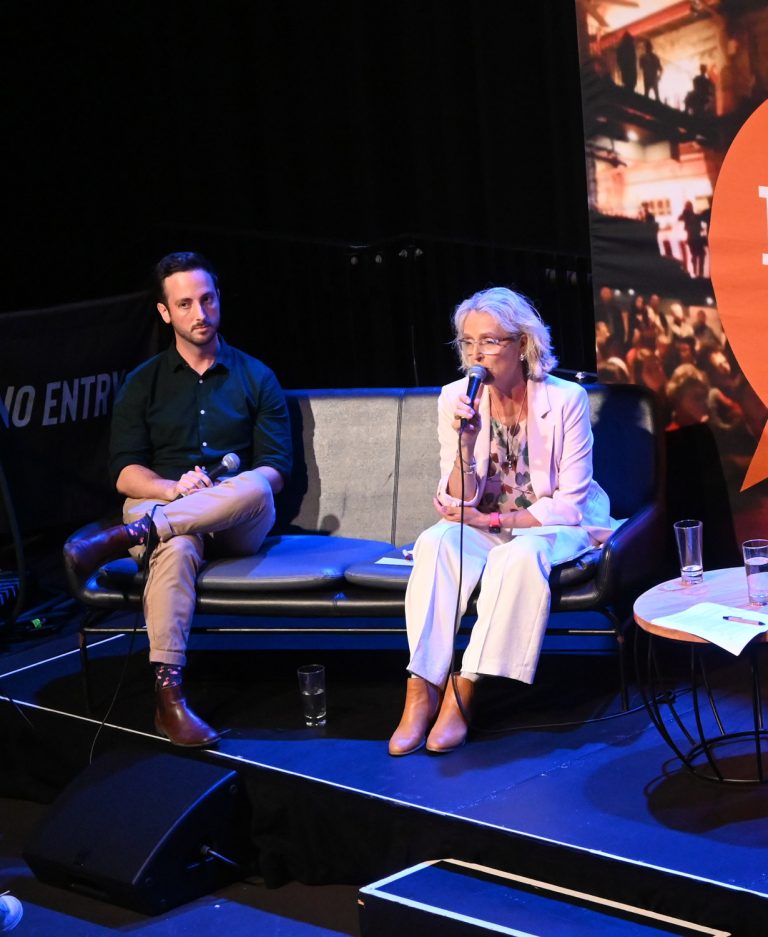
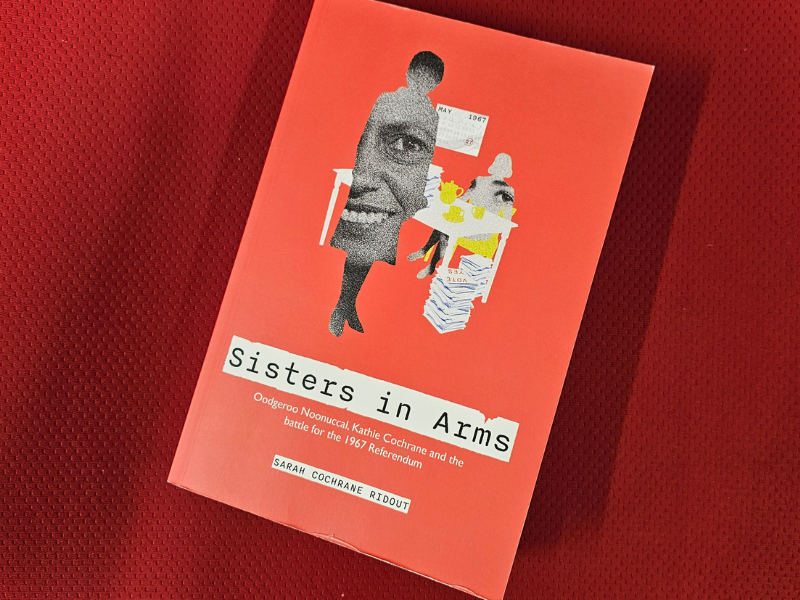
This encounter is narrated in a recent book by New Farm author Sarah Cochrane Ridout, Sisters in Arms: Oodgeroo Noonuccal, Kathie Cochrane and the battle for the 1967 Referendum.

The novelised version of real events, including real quotes from those involved, brings to life the story of two Brisbane women who led the fight for the 1967 Referendum for Indigenous rights in Australia.
Ridout’s own grandmother, Kathie Cochrane, first approached Kath Walker (who changed her name to Oodgeroo Noonuccal following the events of this book) to join the fight in 1958.
The pair, as part of the Queensland Council for the Advancement of Aborigines and Torres Strait Islanders (QCAATSI), would go on to change Australian history.
Of course, Oodgeroo Noonuccal has her own legacy not just as a fearless human rights campaigner, but also as one of Australia’s most influential and talented poets.
Ridout’s book highlights the very different life opportunities these two women were given, and yet the incredible determination Walker held, nonetheless, to make her art and fight for what was right.
While Cochrane attended a wealthy grammar school and was able to pursue a tertiary degree, Walker left school at 13 and was not permitted to study at university or even work the same jobs as Cochrane.
Despite their differences, their shared compassion for the disempowered and sheer resolve, which powered them through almost 10 long years of setbacks and campaigning, drew them together.
The women, and their families, faced considerable intimidation and deterrence from their goal by Australian Security Intelligence Organisation (ASIO) and the conservative Aboriginal and Foreign Missions Committee (AFMC) of the Presbyterian church, not to mention society at large.
Through it all, they were tailed and surveilled by ASIO men. Ridout described the situation: “In the dim light, she saw hats pulled low, men scratching notes into stenographer notepads.”
Cochrane, a schoolteacher, was followed home from school, shakily recounting to her husband Bob, also a key part of the movement, “the run to the car, the vehicle following her, the shadowy men…”.
They went one step further when it came to Walker, breaking in and ransacking her house. Walker and the Cochranes believed it to be ASIO, Queensland Police’s Special Branch, or the Department of Native Affairs.
Labelled as communists, their children faced bullying and ostracism from their peers, causing their parents many worried conversations about the toll their commitment to equality was taking on their offspring.
In the end, though, they decided it was best the children grow up seeing their parents standing up for their values, fighting for equality.
Every Australian who filled out the census this year can take for granted the knowledge that their life, their identity, matters.
But only a generation ago, the Indigenous peoples of Australia were not included on this sheet of paper that had such a large influence on government policy.
What is often forgotten is the battle fought so hard and so dearly, at great personal cost to those involved, that ensured every Australian is counted.
Sisters in Arms is a compelling read, as creative non-fiction it is rich with detail and a tribute to the power of female friendship.
Ridout’s book is not only a fascinating recounting of key moments in the Queensland, and national, referendum campaign, but a probing insight into life at the time for Walker and the many Aboriginal and Torres Strait Islander peoples like her who faced discrimination.
The referendum was won with collective action, knocking on doors and sharing stories so that regular Australians would stand up and decide the country needed change.
As a poet and artist as well as campaigner, Walker said of herself: “I am not a leader; I am a voice.”
Sisters in Arms can be purchased in all good bookstores and online at andalsobooks.com/shop/sistersinarms.