Published April 2025
Brisbane may already seem like it is struggling under the weight of its growth, but its population is expected to reach six million people by 2046, or as large as the current population of Singapore, according to RSM’s 2025 Leading Cities – Brisbane Report.
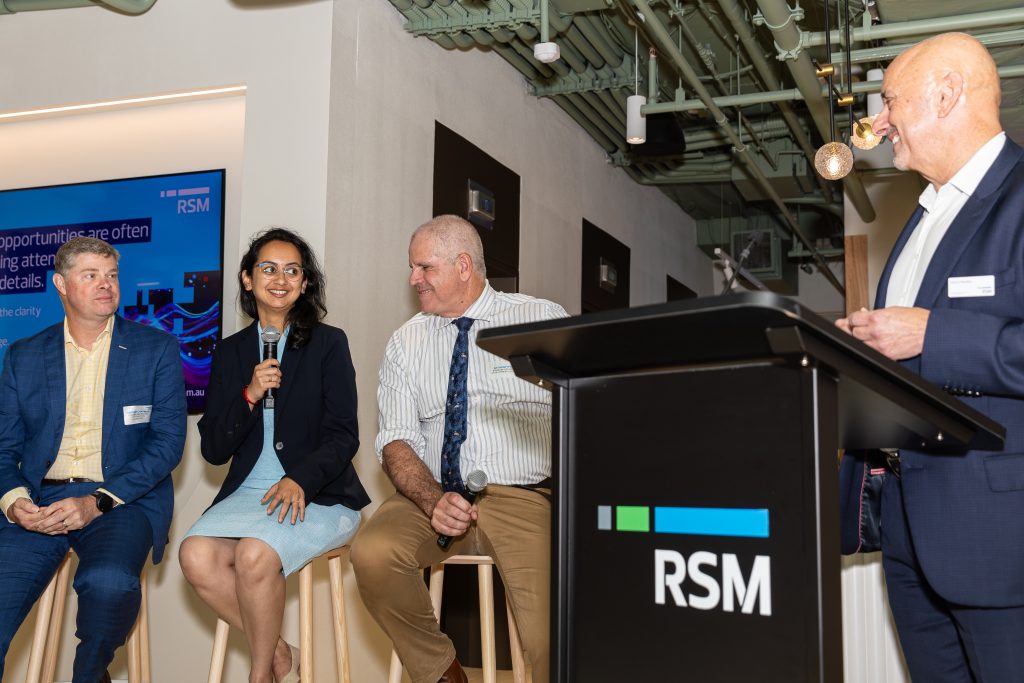
CEO of the Brisbane Economic Development Agency (BEDA) Anthony Ryan said: “2032 (Olympics) is a catalyst to that growth because everyone recognises the opportunities here are huge.”
BEDA forecasts that Brisbane’s economy is expected to grow by 68 per cent by 2041, much of which will be driven by exports, which are expected to grow by 3.5 per cent every year until 2031.
Mr Ryan said: “The Port of Brisbane is the most efficient port in the whole of Australia and our airport has 24/7 operations, which are strong reasons why you’d set up your export industries within the SEQ rim.”
Other drivers are Brisbane’s brilliant lifestyle, thriving economy, proximity to the Asia-Pacific region, and the opportunities that come with hosting international events.
Rapid growth, however, also comes with growing pains.
RSM Economist Devika Shivadekar said: “The biggest…is the traffic congestion…just imagine what will happen when there’s thousands of people coming to Brisbane for the Olympics – all of them booking hotels, wanting Ubers, hiring cars.
“It’s going to be crazy if planning is not done in such a way that accessibility to the venues is improved regardless of where you’re coming from. Which is where projects like the Cross River Rail and Brisbane Metro are important,” Ms Shivadekar said.
Queensland Major Contractors Association (QMCA) CEO Andrew Chapman said: “We’ve got massive constraints along our highways to [the Sunshine Coast, Gold Coast and Toowoomba] and they’re not going to be solved any time soon.”
But it will be a challenge to meet construction demands before the 2032 Olympics.
“We need an 80% increase in our workforce, or an increase in productivity,” Mr Chapman said.
Another challenge is Brisbane’s recognisability, with only 3 per cent of people internationally being able to identify Brisbane on a map, according to research led by the Brisbane 2032 Olympic and Paralympic Organising Committee.
This is expected to change once the 2032 venue is officially announced at the conclusion of the 2028 Los Angeles Olympic Games.
But despite its growing pains and challenges, Brisbane does have natural charm on its side.
CEO of the Queensland Futures Institute Steve Greenwood said: “We don’t have Sydney or Melbourne’s unique built icons, and I don’t think we should aim for that. We’ve got something better.
“We’ve got a lifestyle, a climate, a broad culture that holistically is very attractive, we’ve got people who are friendly and open. It’s our natural attractions, such as the Great Barrier Reef and other globally unique natural areas which make us stand out,” Mr Greenwood said.