The Brisbane City Council is asking residents to give their opinions on the revitalisation of Fortitude Valley.
The council has a long-term vision for the area as well as its renewal for the 2032 Olympic Games. It is also seeking to improving housing choice and connections as well as enhancing cultural and creative experiences, etc. It promises to use technical investigations, community feedback and Queensland Government feedback to develop its plan.
Yet it appears that its plan has already been decided – comments in the council’s press release tell us “it strikes the right balance”.
Even before a plan has been made public!
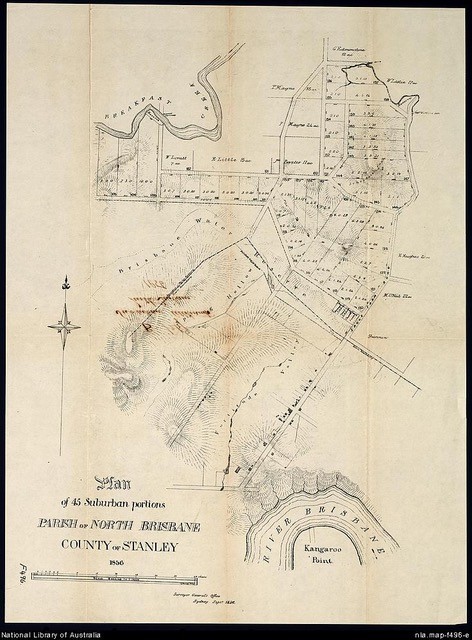
The word “valley” means an elongated low area often running between hills often containing a river or a stream. In our case this is a correct description. Boundary St runs east-west along a small ridge that connects with Centenary Park and from where two major roads, Wickham St and Ann St, like two ladder side rails, run north-east into the valley towards the mouth of Breakfast Creek.
In this valley two distinct precincts have now emerged.
The original 19th Century precinct – nearest the CBD – is the original commercial hub. It now mostly supports a strong nighttime economy.
A new commercial precinct has emerged in the 21st Century centred around James St, that is replacing and to some extent replicating that original commercial hub.
Early valley growth was assisted by the sectarianism that prevailed in the late 19th and early 20th centuries. Protestant stores were located along Queen and Adelaide streets whereas Catholic stores became located in Fortitude Valley.
This was reflected in discussions over a site for the new City Hall. The Brisbane City Council initially favoured the site now known as Cathedral Place site as it felt its other site in Adelaide Street, close to the Brisbane River, would incur extra construction costs. Nevertheless, Adelaide Street was chosen and the Cathedral Place site sold to the Catholic Church.
An extension to the railway line in 1891 and the later introduction of trams allowed the valley to become a popular place to visit and shop with its department stores, restaurants and many pubs close by. However, beyond the shops and pubs was warehousing, the council bus depot, a Coca Cola bottling plant, light industry and worker housing.
The popularity of the valley lasted until the Mid-20th Century when the growth of outer suburbs together with the arrival of the large suburban shopping centres and cheaper private transport encouraged shopping elsewhere.
Massage parlours and gambling replaced the department stores giving the valley a seedy reputation. Efforts to revitalise it in the early 1990s included establishing a Chinatown and promoting the area as a music precinct with several concert venues providing a range of live music shows. Later in the 1990s the McWhirters building was refurbished and turned into apartments and a short lived shopping mall. It now has decayed considerably.
This is all part of the cyclical nature of cities. An ignored or discarded place or precinct is discovered, it becomes fashionable, restaurants (the shock troops of urban renewal) are established attracting visitors and it becomes a sought after area. Then larger businesses move in, rents are raised, the early entrepreneurs move out and a decline commences.
Sometimes the reasons for decline are different. In Brisbane the CBD has lost its attraction as a destination for a number of other reasons including the enormous jump in carpark rates. the disruption caused by the Cross River Rail work, the after-effects of Covid and working from home.
Any council plan should focus on those spaces within the ladder side rails that connect the two major precincts.
Here is a hint: discourage the amalgamation of sites – allow smaller players to compete and the freedom to do so. Fortitude Valley is a rich and significant place – its character is provided by its diversity. Its future success depends on that diversity continuing.
The council’s press release contains code words (in council-speak) for high rise residential buildings and talks about raising height limits. It does not use the word “apartments” instead it only refers to “homes and housing”. A dead giveaway for what is intended.
It does not give any reference to the valley’s rich history and how it can be sustained as a community. If not done carefully it will lead to a bunch of high-rise buildings sitting on carparking podia.
The council plan should not be a one size fits all. There are different forces at work in the different precincts and the council should allow the particular characteristics of those precincts to emerge.
Filling them with large, amalgamated sites and oversized buildings is not the answer. Diversity is the key to the renewal of the valley and its precincts.
Tell us what you think should happen in the valley.
Have your say – email [email protected]