If you want to understand the true history of Brisbane, you have to be comfortable with the occasional bull shark nudge.
Archie Nahman is 19, a marketing student at university, and perhaps the most active amateur historian working the Brisbane River—mostly because he’s the only one willing to stand chest-deep in rancid silt wearing a $20 op-shop wetsuit with a spear-gun shaft strapped to a mop handle.
“It’s very low-tech,” Nahman says of the mud treading hobby he and his 16-year-old brother, Harry, have adopted.
The Woolloongabba brothers first entered the mud in 2019 after a family story about a great-grandfather who threw away matchboxes full of coins.
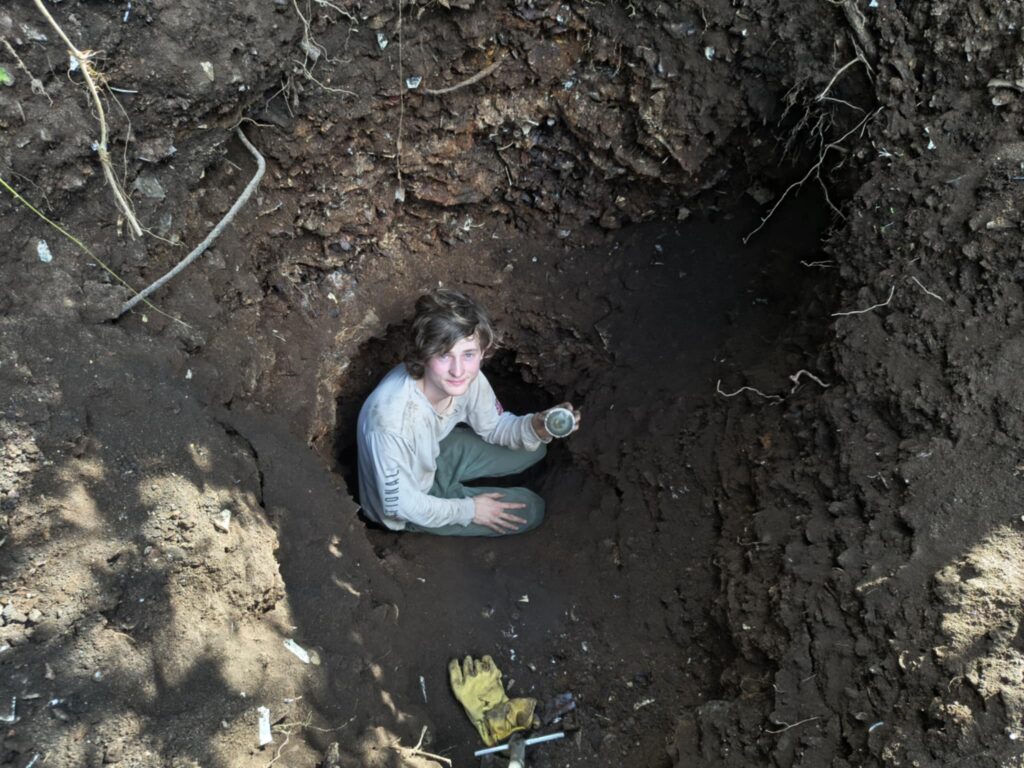
Since then, they have graduated from digging in old land dumps to the more dangerous, tactile world of the river.
Archie said mud treading is a sensory-deprivation game. In the river, visibility is zero.
“You can’t see anything,” Nahman says. “I know people who wear motorcycle helmets underwater because they’re worried about slashing their heads open on a pointy, iron-encrusted rock they can’t see.”
Then there is the wildlife. While the river acts as a nursery for bull sharks, Nahman takes a pragmatic, slightly wary approach to the risk.
“They aren’t really a threat, but it is prudent to avoid their hunting times. They tend to nudge people—they’ll ram into your legs to see if they can eat you; they’re very considerate like that. They will give you a warning.”
The tools of the trade are equally pragmatic: a milk crate rigged with pool noodles for buoyancy and a probe to feel for the difference between a rock and the smooth curve of a 150-year-old chemist jar.
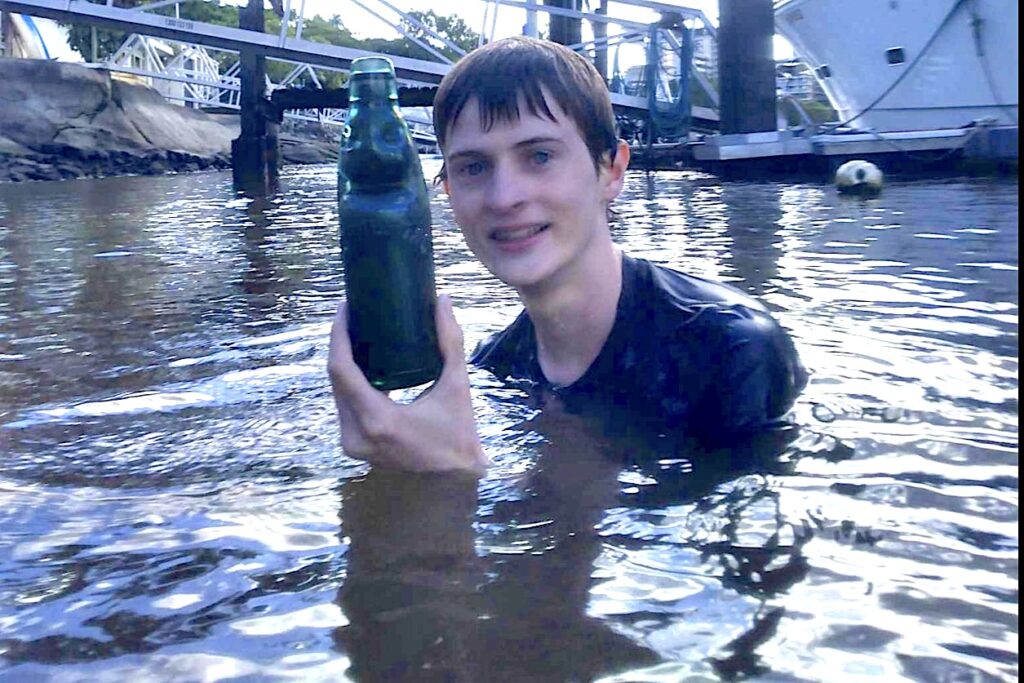
The pinnacle of Nahman’s collection—and arguably one of the best finds in Brisbane bottle-collecting history—came from the Bulimba Reach, between the ferry wharf and HMAS Morton.
“I was in the water up to my chest. I hit a bottle, pulled it out—oh, it’s a big, stupid beer. Throw it away. Another one, stupid beer,” Nahman says. “I grabbed this one, pull it up, and water is dripping off my face, I can’t see anything. I just hear the guy I’m treading with go, ‘Holy shit. What the heck is that?’”
The bottle was a 26-ounce J. Cosgrove “Cockatoo” Codd bottle, circa 1912. Featuring a bird in a cage and the slogan “This speaks for itself”, it is one of only half a dozen known to exist.
During the week, Nahman—a Brisbane State High alum—is a university student majoring in marketing with a minor in finance.
He sees the irony of a student of modern commerce spending his spare time researching the primitive branding of the 1800s.
“All the Brisbane chemists used to have embossed bottles, and the soft drink makers had their own,” Archie says.
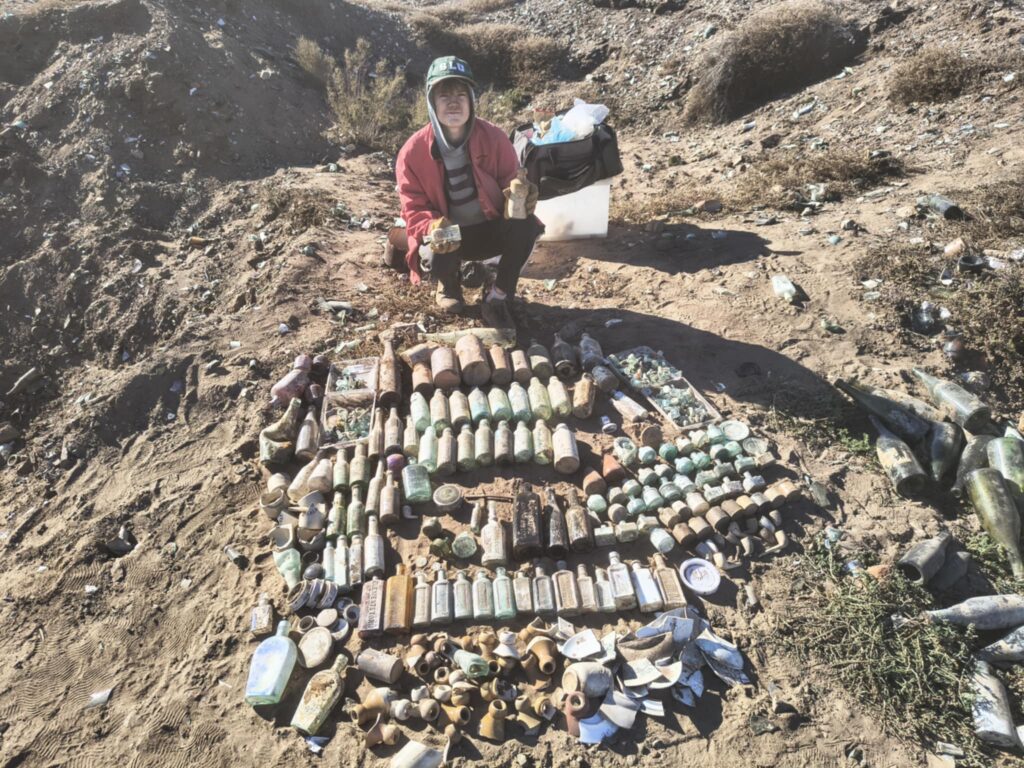
He’s particularly drawn to the personal nature of chemist bottles, owning over 220 from Brisbane makers—many from “ghost pharmacies” like those once found at Clarence Corner.
“They’re really personal things, with links to a specific person, not a group,” he says. “You see these ‘cures’ for rheumatism or gout—lotions that people loved because they could feel them burning the skin, so they believed they were working.”
One Brisbane company even claimed its eucalyptus oil could “bring a sufferer back from the edge of the grave” from tuberculosis.
For the Nahmans, the river is a more reliable record of Brisbane than the city’s museums. “The museum doesn’t display many bottles. They’ve got piles of them in the back, but people want to see dinosaurs and mummies,” Archie says.
From 1840s shipping debris to 1960s school milk bottles, the silt holds what many land-based archives have lost.
“When you take something historical from under the water, it’s a real high,” Alfie says.
“But when you’re not finding anything, you just sit there going, ‘I’m cold. This sucks’.”
The Mud-Treader’s Glossary
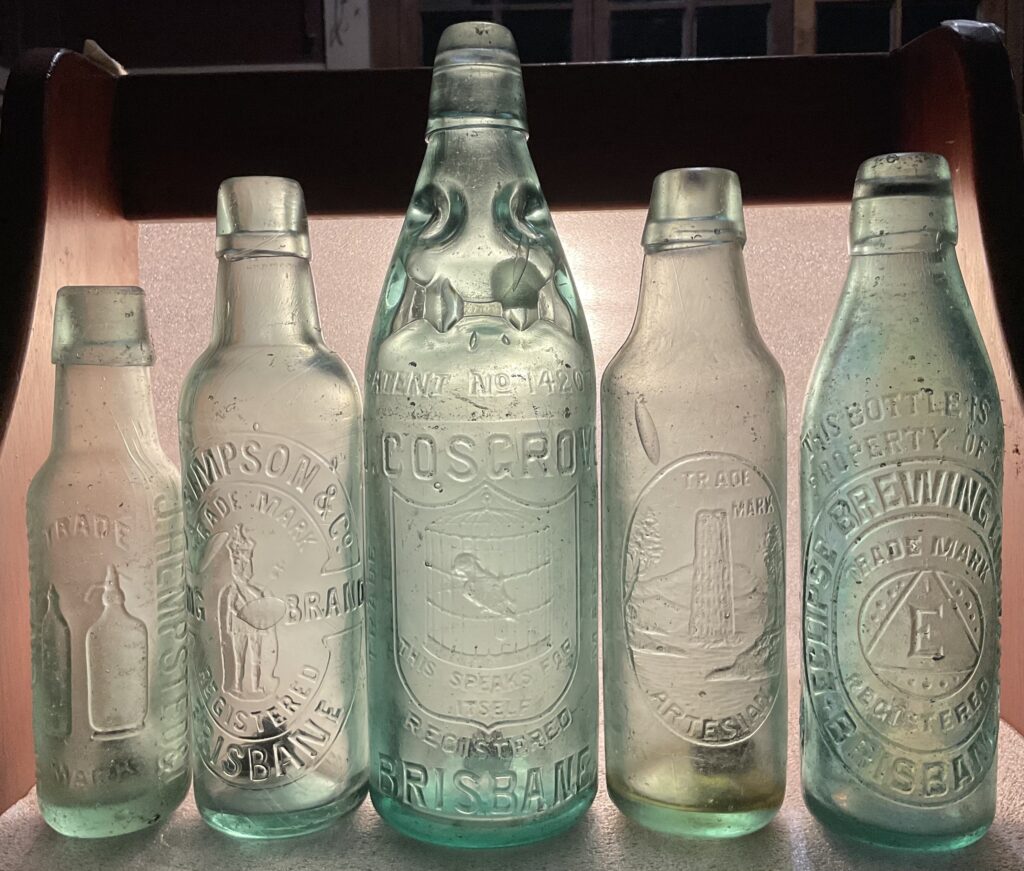
• The Codd Bottle: An 1890s design using a glass marble and gas pressure to seal the fizz. A “special patent” often used by makers like J. Cosgrove to dodge patent taxes.
• Hamilton Torpedo: An earlier, pointed-bottom bottle. “The solution wasn’t to fix the problem [of drying corks],’ Nahman says, “it was just to make a new problem where the bottle can’t stand up at all”.
• Amethyst Glass: Pre-1914 glass that turns purple due to manganese oxide. A chemical “time stamp” from before WWI supply lines were cut.