Queensland Rail’s (QR) revised working model will strand vulnerable passengers, blow out train timetables, and strip frontline safety checks from 300 stations.
That’s the claim from QR staff who say the Station Customer Service Model scheduled for May will strip customer service staff from platforms after 1pm on weekdays and weekends.
While Transport Minister Brent Mickelberg dismissed the backlash as a “disgraceful scare campaign”, a whistleblower has stepped forward to Village Voice to warn that the new model is flawed.
The staffer warns it creates a logistical nightmare for the state’s New Generation Rollingstock (NGR) trains and jeopardises the safety of the network’s most vulnerable commuters.
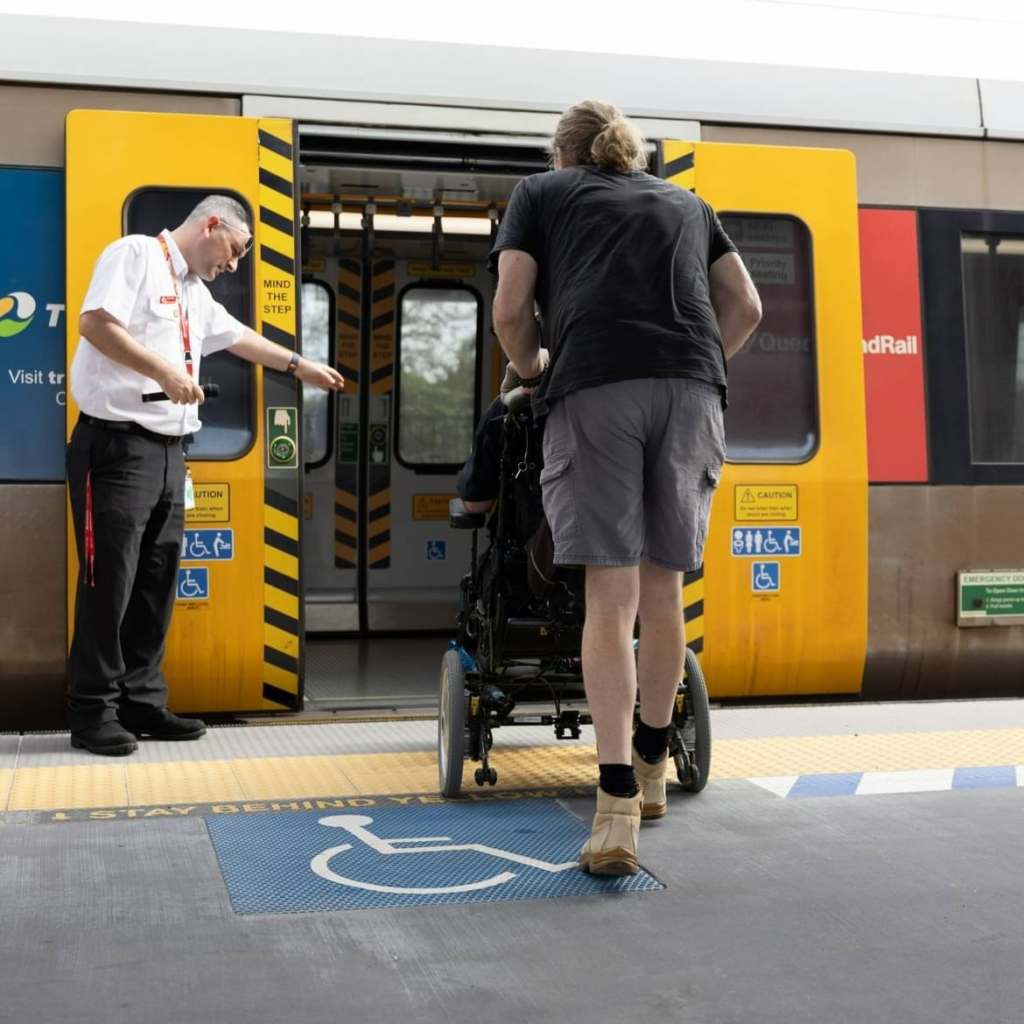
Speaking on the condition of anonymity, the staffer said the removal of platform staff clashes directly with the design of the NGR fleet. With centralised boarding points and guards positioned at the rear of the train, unstaffed platforms will force guards into a time-consuming scramble.
“If the platform is not level … the train will need to wait while the guard moves to the centre of the platform to assist with boarding, remove the ramp from the locker, place the ramp down, chat with the customer … and then walk back to the rear compartment before the train can depart,” he said.
The QR source warned this will hamper On Time Running (OTR) schedules.
The Rail, Tram and Bus Union (RTBU) warns the fallout will be experienced by passengers with disabilities, who will not only be forced to wait longer but endure the stigma of visibly holding up the network.
RTBU QLD Branch member Peter Allen characterised the policy as creating a “deficit of dignity.”
“Public transport is meant to be dignified and provide equal access for all. In a world where we appear to have endless streams of gold for sporting stadiums, do we take shortcuts on things like this?” Allen asked.
Allen estimates 320 work hours will be lost at Roma Street station every week.
Queensland Rail defended the overhaul. Rob Hill, Executive General Manager of SEQ Operations, stated: “All customers who require assistance will continue to be supported by either a station staff member or onboard staff member. This process is already in place across the network. Based on data analysis, Queensland Rail is simply rostering staff where and when they are needed.
“The changes are based on facts and patronage statistics, which show that some stations require more staff at certain times while others are not as busy. We’ve looked at data where we know there are high assisted boarding requirements to ensure we continue to provide a high level of service for customers.”
To offset the missing station staff, QR is promoting a “safety boost” with the addition of 35 Authorised Officers (AOs) to double the unit’s ranks, supported by 12,000 CCTV cameras.
However, the whistleblower said trading stationary staff for roaming security is a dangerous gamble, noting that AOs only spend short periods at stations before moving on.
“While cameras record incidents, they cannot retrieve a dropped phone from the tracks, guide a lost child, or talk down a passenger in severe distress,” he said. “Staff routinely intervene in attempts to take one’s life and also assist passengers with dementia.”
The RTBU highlighted that Perth’s smaller rail system employs 500 AOs to manage a similar roaming model.
The QR source said many staff see the consultation as a bad-faith “box-ticking exercise” that has triggered anxiety and “psychosocial harm” among staff.
“Staff are experiencing anxiety over possible short-term contracts not being renewed,” he said.
“Any questions or suggestions to QR were met with the same generic response.”
The RTBU fears further cutbacks will be implemented later this year.