Brisbane’s challenge is not whether to grow, but how to – and whether we choose buildings that merely house people, or neighbourhoods that allow them to belong.
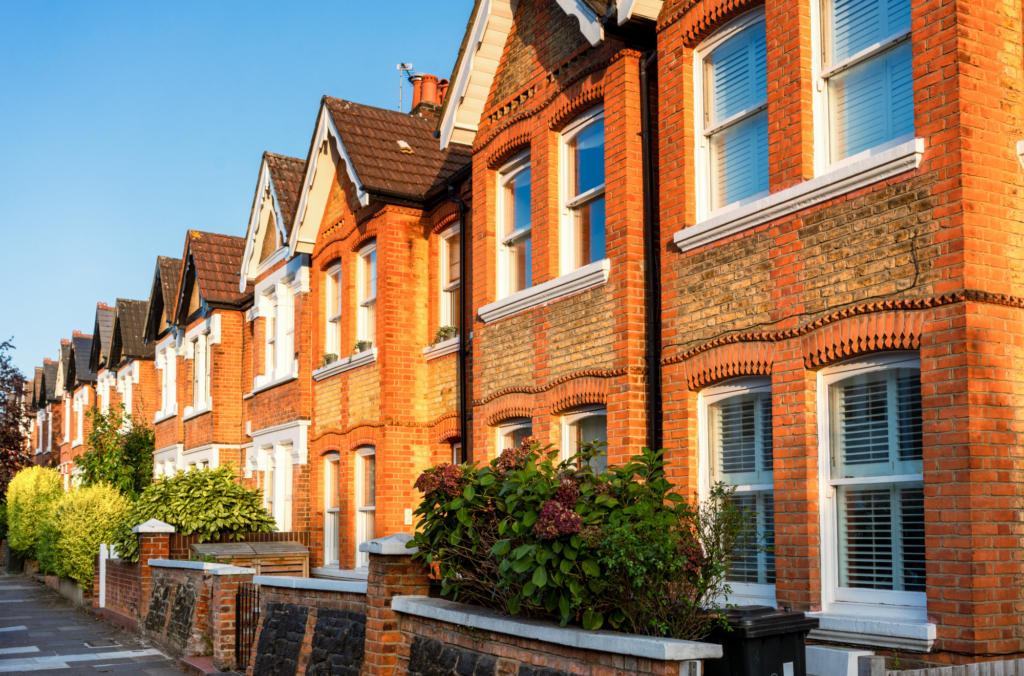
Perhaps you have heard the term “missing middle” which has recently emerged as describing attached or terrace housing, which bridges the gap between single-family homes and high rises.
It provides the same density but is more affordable, walkable, and community oriented.
A good example can be found locally at Wooloowin’s Greville Townhouses development by Cedar Woods where there is a successful mixture of terraces and apartments that blend with the existing suburban pattern.
So why has it now become such a topic of interest in Brisbane?
To understand it in a Brisbane context, we need to see why the city now looks the way it does.
Brisbane was settled at a time of cholera in London and Paris, and there was a prevailing view that such diseases were caused by a miasma – a noxious form of “bad air”.
Overcrowded dwellings were seen as a contributing cause. In 1885, because Brisbane was settled later than Sydney or Melbourne where terrace housing was already the early norm, the Queensland Undue Subdivision of Land Prevention Act was passed to prevent similar overcrowding.
It stopped the subdivision of land by speculators and developers into lots fewer than 16 perches (405 square metres), with the result that most residential development here consisted of detached homes on rectangular lots, usually with a frontage of 10 metres and a depth of 40 metres.
This, combined with the hilly terrain and the prevalence of timber, effectively prevented the development of terrace housing as a viable option.
Together, late settlement, restrictive lot sizes and topography meant terraces never became a normal or familiar housing choice in Brisbane.
While the Act made Brisbane and other Queensland cities more attractive and less overcrowded places to live, the resulting low population density made it significantly more expensive to provide services such as sewerage paving, and street lighting.
As a result, Brisbane was the last major city in Australia to be comprehensively sewered, and unpaved laneways were common in the inner city until the 1960s.
After World War II, the availability and affordability of the private car plus an increasing population allowed the creation of suburbs further from the city centre, resulting in a pattern of villages or small towns linked by roads. Apartment buildings immediately adjacent to the city centre were built where single family dwellings were not possible, and those early apartments were distinguished by their quantity and quality of space.
This drive to the suburbs saw terrace housing in other Australian cities become viewed as inferior accommodation – social housing – and it was largely abandoned as a housing typology until it was revived by a younger cohort in the late 1970s.
As a result, terraces became culturally associated with decline rather than choice, reinforcing their disappearance from Brisbane’s housing plan.
They are now being reimagined as a solution that provides density with liveability and affordability. They are capable of accommodating younger and older residents while also blending into nearby single-family neighbourhoods because of their smaller scale. Their lack of multi-level parking structures, lifts, mechanical services and concrete frames makes them an excellent, lower-cost option for infill development.
But most importantly, they contribute to what sociologist Ray Oldenburg terms as “third places” – informal gathering places that are important for fostering community. These spaces create community ties essential to our health. Oldenburg argues that the decline of these informal places has contributed to the erosion of community, civility, and increased isolation and division in society.
High-rise apartments often disconnect residents from street life and from each other. Density alone does not make a city liveable.
Brisbane’s challenge is not whether to grow, but how to – and whether we choose buildings that merely house people, or neighbourhoods that allow them to belong.