Catherine O’Kane
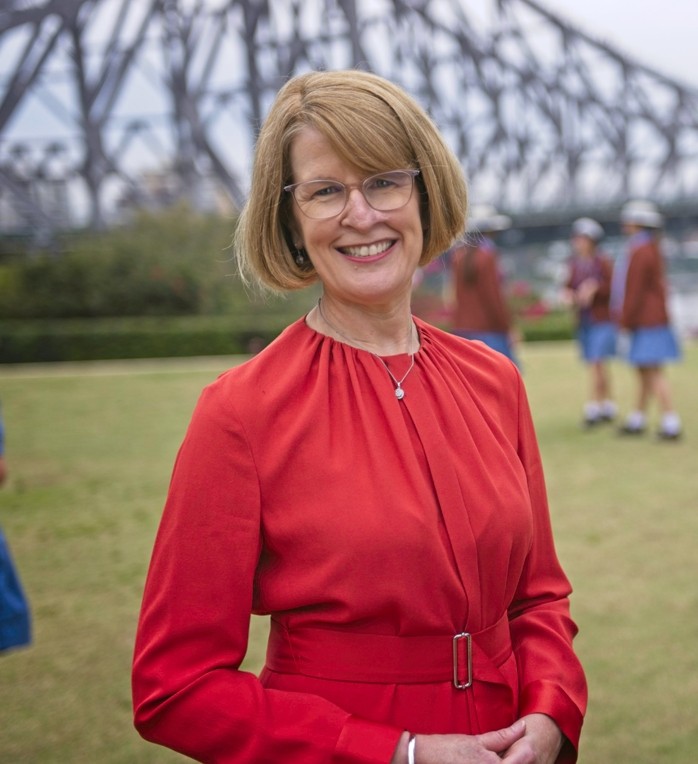
All Hallows’ School
What are your school’s top education priorities?
At All Hallows’, we focus on educating young women who live with integrity guided by our Mercy values. We equip our students with the skills to build positive relationships and develop critical literacy and metacognitive skills to become thoughtful, lifelong, resilient learners.
How do we address the advent of AI and other technology in students’ lives?
We teach students to view AI as a tool to enhance learning rather than replace it. Our strong emphasis on critical literacy helps students evaluate and use technology wisely and responsibly.
What role do extra-curriculars play in children’s development?
Extra-curricular activities have been a hallmark of an All Hallows’ education since 1861. They are essential to holistic development, offering students opportunities to grow in leadership, teamwork, confidence, and community spirit. A highlight of each week for me as Principal is spending time watching our students in performances or at sport, speaking with our families on the sidelines, and working with our vibrant Parent Support Groups.
What has shaped your approach to education?
Across more than 40 years as a teacher and educational leader, flexibility has been essential to my approach. Each generation of students has different needs, and each generation of parents also brings unique expectations and experiences. Schools play a vital role in responding to the needs of the time, and I have always believed in evolving educational practices to best support the needs of the young people in our care.
Do you have any other philosophies or practices that guide your school?
At All Hallows’, inclusion is at the heart of our philosophy. We ensure there’s a place for every student in our teams, ensembles, and activities, fostering collaboration and a sense of belonging for all.
Dr Alan Campbell
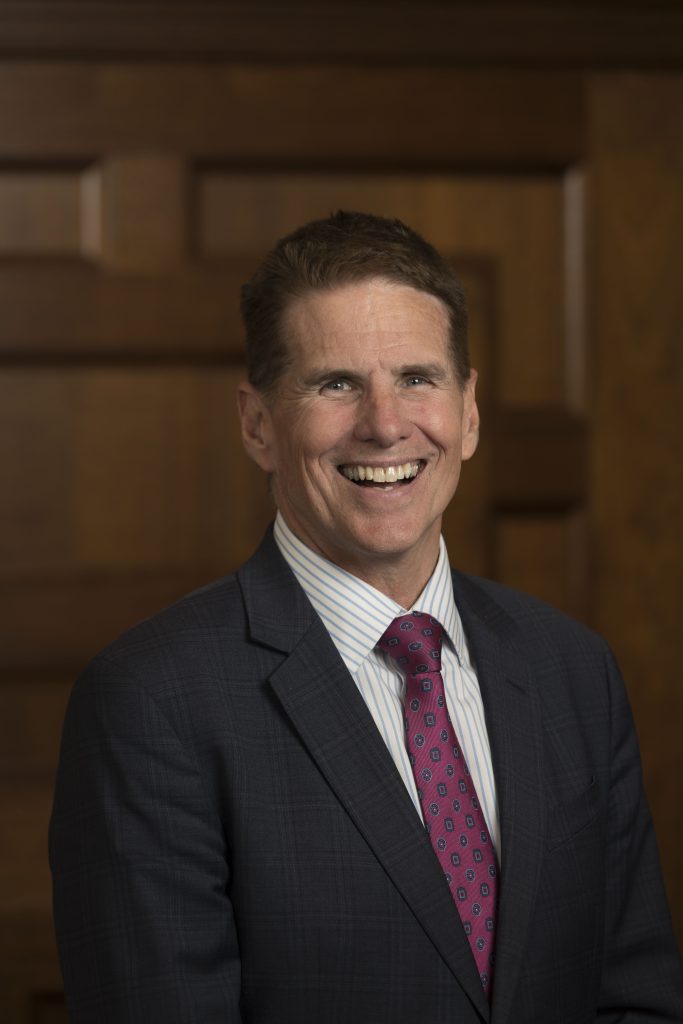
Anglican Church Grammar School (Churchie)
What are your school’s top education priorities?
My top priority is the formation of good character in a vigorous and nurturing learning community. Also important is opening every student’s heart and mind to their immense potential and having them identify their inherent gifts to pursue their passions in life. We want students to recognise that they can make a very contribution to the world both while they are at school, and beyond in life.
How do we address the advent of AI and other technology in students’ lives?
We address AI by having open and educative conversations with students, staff and parents about how we are all learning and recognising that AI applications can have positive and negative consequences.
What role do extra-curriculars play in children’s development?
Extra-curricular activities play a vital role in the formation of a well-balanced life. Good character, leadership, communication and team-building skills are developed in these pursuits.
What has shaped your approach to education?
My approach to education has been shaped by a deep conviction that, as educators and parents, we are in a position to inspire young people to excel beyond their own expectations. I have seen the power of education do this countless times.
Do you have any other philosophies or practices that guide your school?
An enduring philosophy at our school is conveyed in the expression: “finish hard”. That is, to embrace a task and ensure that you give it your all and pursue it to completion; do not give up part-way or half-heartedly, nor when the going becomes difficult.
Anthony Micallef
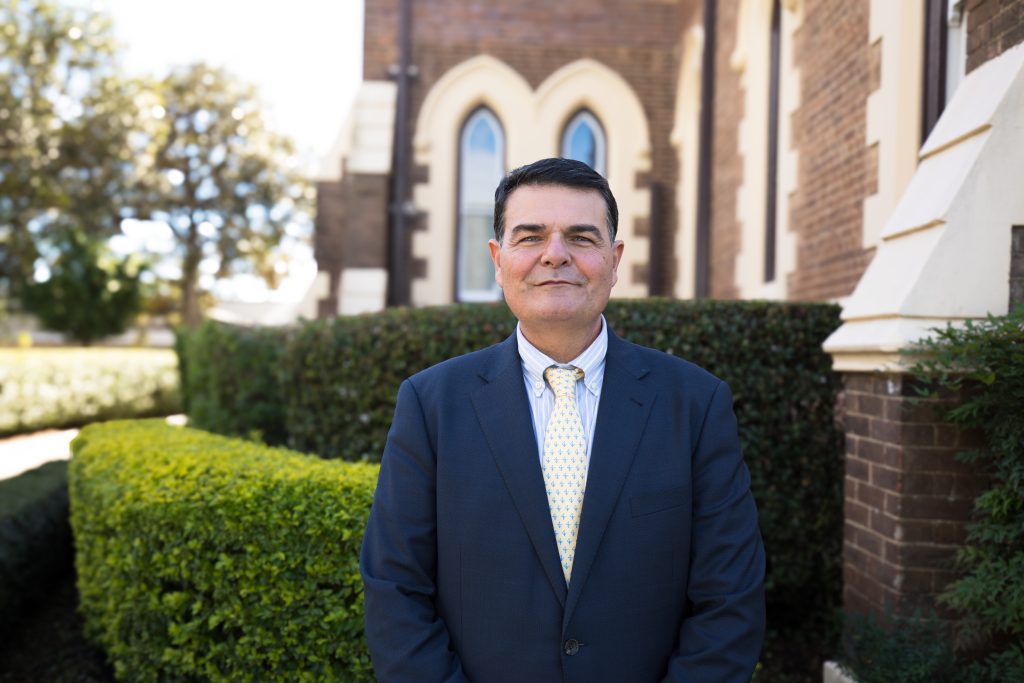
Brisbane Grammar School
What are your school’s top education priorities?
Our top priorities focus on providing a holistic educational experience that nurtures both academic excellence and personal growth. We emphasise critical thinking, creativity, and emotional intelligence, preparing students for the complexities of the modern world. Additionally, we prioritise inclusivity and diversity, to make sure every student feels valued and supported.
How do we address the advent of AI and other technology in students’ lives?
Embracing AI and other technological advancements is crucial in today’s educational landscape. We integrate technology into our curriculum by teaching digital literacy, ethical considerations of AI, and encouraging responsible use of technology. By doing so, we aim to equip students with the skills navigate and thrive in a tech-driven world.
What role do extra-curriculars play in children’s development?
Extra-curricular activities are vital for children’s development as they provide opportunities for students to explore their interests, develop new skills, and build social connections. At Brisbane Grammar School, these activities foster teamwork, leadership, and time management skills. Moreover, they offer a balanced approach to education, ensuring that students grow not only academically but also emotionally and socially.
What has shaped your approach to education?
My approach has been shaped by mentorship from inspiring educators, memorable moments in the classroom, and impactful encounters with students. One particularly influential experience was witnessing the transformative power of personalised learning, where tailoring education to individual needs significantly boosted student engagement and achievement. This has reinforced my belief in understanding and addressing each student’s unique strengths and challenges.
Do you have any other philosophies or practices that guide your school?
One key philosophy at Brisbane Grammar School is the commitment to lifelong learning, for both students and educators. This mindset not only keeps our community innovative but also instils a love for learning beyond the classroom. Additionally, we believe in the power of community involvement and partnerships, recognising education benefits from diverse perspectives and resources.
Dr Andrew Cousins
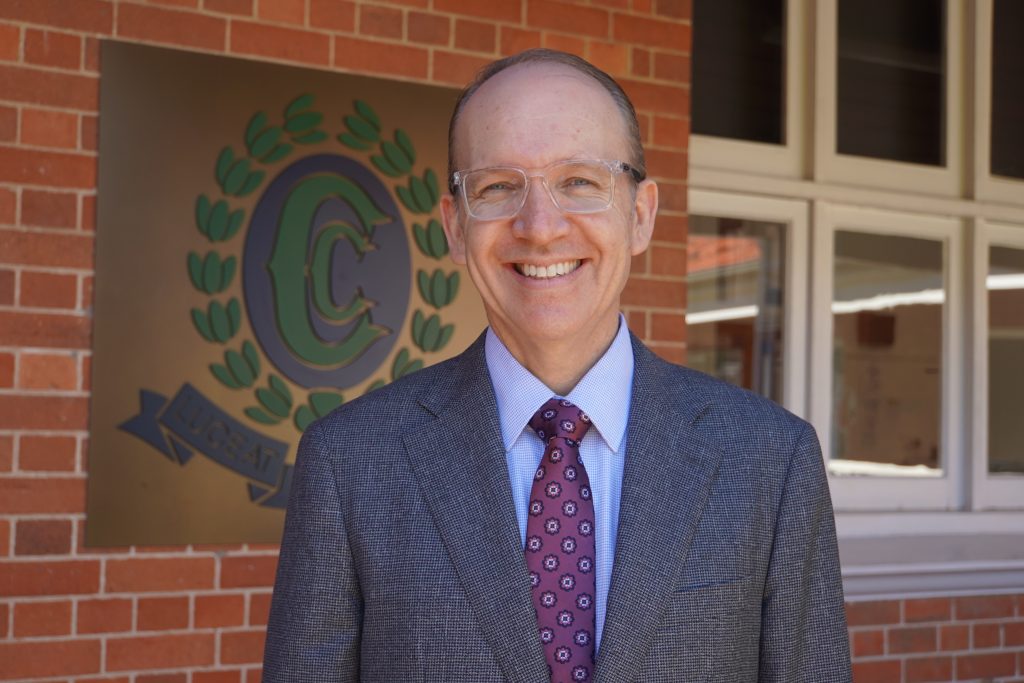
Clayfield College
What are your school’s top education priorities?
Clayfield College’s mission is to partner with parents in raising motivated and conscientious young people who will impact their world through integrity, inclusiveness, sustainability and service. Our priority is to create an environment where every student is known, valued and understood — not just as learners, but as individuals with unique interests, voice and potential. Our four strategic priorities are: Learning by design; Wellbeing through belonging; Learning from experiences; and Sustainability with responsibility. Our goal is to create rich opportunities for young people to discover their passions and ‘let their light shine’.
How do we address the advent of AI and other technology in students’ lives?
Educator George Couros said it best: “Technology won’t replace great teachers, but technology in the hands of great teachers can be transformational.” AI and other technologies are powerful tools that, when thoughtfully used, can spark innovation, deepen learning and encourage critical and ethical thinking. At Clayfield, our AI policy and professional learning for staff ensure that technology can enhance student curiosity — not distract from it.
What role do extra-curriculars play in children’s development?
‘Learning from experiences’ is central to the Clayfield College experience. Extra-curricular learning is so vital because it complements a student’s academic pursuits. It creates a place for a student to follow their passion, persevere and work towards achieving a long-term goal. Academic, psychologist and author, Angela Duckworth, talks about the power of ‘grit’… whether it’s music, sport, service or leadership, these experiences promote perseverance, teamwork, organisation and resilience.
What has shaped your approach to education?
My approach has been shaped by many mentors and milestones — from supportive school leaders and piano tutors to transformative research experiences. One defining experience was my PhD research, where I surveyed and interviewed STEM students about inclusivity. That project underscored the importance of student voice in decision-making. This belief now shapes my leadership style: I try to listen deeply, guide with empathy and place students at the centre.
Do you have any other philosophies or practices that guide your school?
Clayfield College is now a fully co-educational Pre-Prep to Year 12 school that offers all the benefits of single-sex and co-education through the distinctive Parallel Learning model. It’s well documented, particularly in middle schooling, that social, emotional and academic development of all students is quite different. For me, Parallel Learning means we can more sensitively tailor education while removing gender stereotypes, allowing students to develop a strong sense that they’re known, belong, and can be the best version of themselves.
Sharon Barker
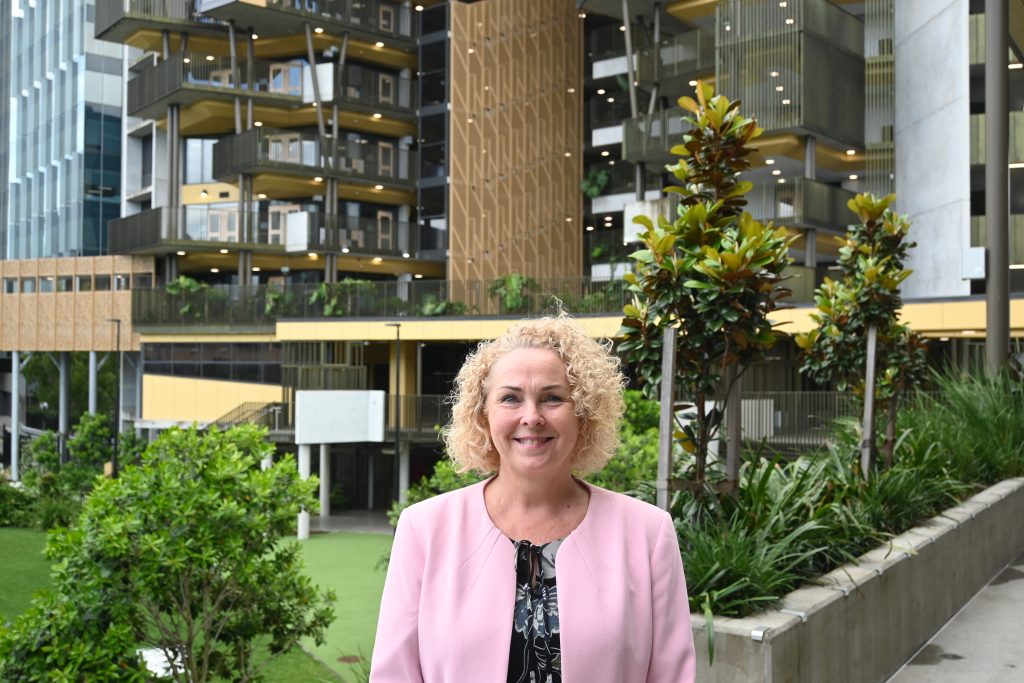
Fortitude Valley State Secondary College
What are your school’s top education priorities?
Our purpose is simple but powerful: create a culture where we are good at learning and good at life. We focus on real-world education that builds a community of agile learners who are bold, resilient, and kind. Those aren’t just words on a page; our purpose and vision shape everything that we do, from curriculum design to how we support student wellbeing.
How do we address the advent of AI and other technology in students’ lives?
Technology like AI is part of our world, and schools have a responsibility to help students navigate it safely and effectively. We teach students the parameters and possibilities of emerging tech, so they can use it wisely, ethically, and in ways that enhance their learning.
What role do extra-curriculars play in children’s development?
Extra-curriculars are a vital part of education. They help students discover passions, develop teamwork and confidence, and build strong connections with peers and staff. I co-produced the Rock Eisteddfod at one of my previous schools, Harristown State High, for ten years because I believe in the power of student involvement beyond the classroom. I’m thrilled that our second whole school production is in the works for later this year.
What has shaped your approach to education?
I’ve been shaped by my own incredible teachers. One in particular from my early high school years later became a colleague and I had the chance to tell her the impact she had on me. That reminder of the power of a great teacher still drives me today.
Do you have any other philosophies or practices that guide your school?
At FVSSC, our purpose of creating a culture of being good at learning and good at life means we prioritise student wellbeing as much as academic growth. While achievement standards matter, success for us goes well beyond the classroom. We’re focused on building a positive culture where students feel supported, connected, and ready to thrive in the real world.
Erin Wedge
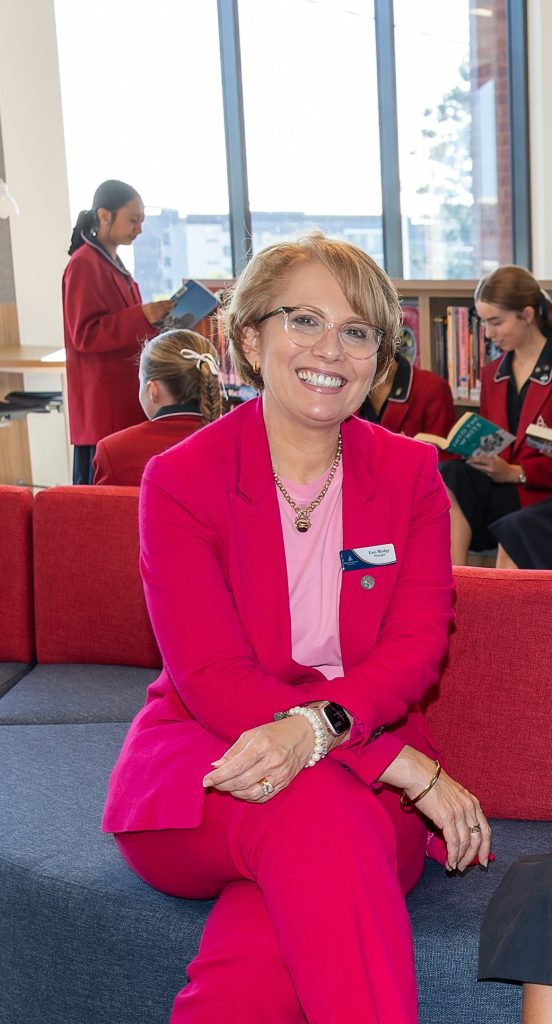
Mary MacKillop College
What are your school’s top education priorities?
Rooted in the values of Saint Mary MacKillop and the Josephite tradition, our mission is to nurture students who are confident, curious, creative, resilient and courageous — Truly Remarkable Women ready to shape the world. As an all-girls Catholic secondary college, we believe in allowing students to explore their potential in every area — academic, spiritual, cultural, and social.
How do we address the advent of AI and other technology in student’s lives?
Emerging technologies — particularly AI — bring both opportunities and challenges. We recognise the impact this can have on mental health and wellbeing and we educate students to navigate this evolving landscape with confidence and care. We embed digital literacy across our curriculum, particularly in Design, Technology, and Film, TV & New Media. We also have a dedicated working party of teachers exploring best practices for integrating AI into teaching and learning.
What role do extra-curriculars play in children’s development?
At Mary MacKillop College, co-curricular life is not just an add-on — it’s an essential part of becoming a Truly Remarkable Woman. It is a vital part of our students’ growth, where students build confidence, form lasting friendships, and discover new passions. Our College proudly participates in the Catholic Secondary Schoolgirls’ Sports Association competition, we offer a vibrant music program, and a variety of clubs and interest groups, fostering a sense of belonging.
What has shaped your approach to education?
My approach has been shaped by a lifelong calling to teach and by the powerful influence of the women who taught me. I was educated in an all-girls setting by the Sisters of St Joseph and the Presentation Sisters, whose deep commitment to learning and justice inspired in me a belief that, as a woman, I could achieve my full potential. One teacher who had a lasting impact on me was my Year 7 teacher, Debbie Ford. She brought learning to life with boldness and creativity, and her courage in the classroom showed me the power passionate and purposeful teaching.
Do you have any other philosophies or practices that guide your school?
We have a deep commitment to championing the educational needs of girls. We foster a culture of achievement and high expectations, where self-confidence is nurtured, leadership is developed, and every girl is empowered to be her authentic self. Our mission is to provide an education that not only keeps pace with change but equips girls to flourish within it.
Shannon Carter

Queensland Academies Creative Industries Campus (QACI)
What are your school’s top education priorities?
At QACI, our top priority is the holistic development of every young person. As an International Baccalaureate World School, we nurture curious, creative, and globally minded learners through a balance of academic rigour, wellbeing, and personal growth. Our goal is to grow better learners—and better people.
How do we address the advent of AI and other technology in students’ lives?
At QACI, we teach students to use AI as a tool—not a substitute for thinking. As technology evolves, human competencies like ethical reasoning, creativity, collaboration, and critical thinking will become even more essential. Our focus is on helping them learn how to learn—adaptively, responsibly, and with purpose. “Whoever does the thinking gets the learning.”
What role do extra-curriculars play in children’s development?
Extra-curriculars play an important role in supporting a well-rounded education. At QACI, the International Baccalaureate’s CAS program—Creativity, Activity, Service—encourages students to explore interests beyond the classroom. Whether through the arts, sport, or community initiatives, these experiences help build confidence, leadership and a broader sense of identity.
What has shaped your approach to education?
Early in my career, I worked under a principal who lived and breathed the belief that every child—regardless of postcode—deserves the best education. Their unwavering moral purpose has stayed with me. This has shaped my belief in the power of public education and the importance of a strong, values-driven school culture. This guides my work as a leader each and every day.
Do you have any other philosophies or practices that guide your school?
At QACI, we see creativity as essential to all learning—not confined to the arts, but embedded across every discipline. Through the International Baccalaureate, students are challenged to think critically, innovate, and engage in learning that is relevant and purposeful, developing the confidence to lead and create positive change. We’re preparing our young people not just for what’s next, but for a future they’ll help shape. It’s an education that opens doors—and minds.
Andrée Rice
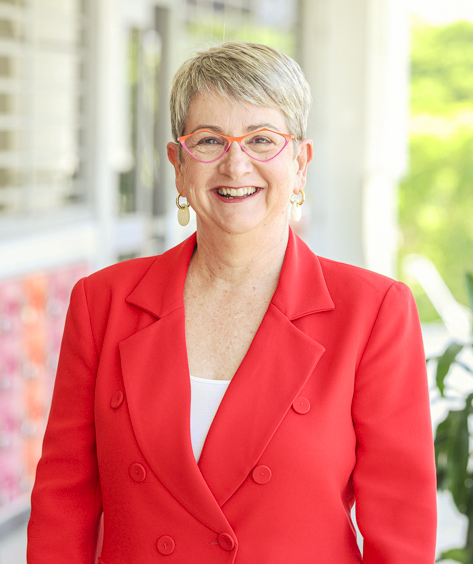
St James College
What are your school’s top education priorities?
Ensuring that wellbeing, engagement and safety are at the heart of the Jimmies educational experience. When students feel secure and at home, they can be challenged and supported to reach their potential.
How do we address the advent of AI and other technology in student’s lives?
We do this by developing the ability in our students to think critically. Teaching for thinking is the most crucial 21c skill and therefore pedagogy for the times we are in and critical thinking will equip our students to respond intelligently to all challenges including AI. We have a current partnership with UQ’s Teaching for Thinking Program and are a Thinking School! Watch this space.
What role do extra-curriculars play in children’s development?
They help develop all aspects of young people’s lives – social, physical, cultural, artistic. Human beings learn and grow just as much through extra-curricular as by what happens in the classroom. We have an extensive co-curricular program taking in a myriad of sports excellence and coaching programs, service and advocacy learning including our Brekky Van and a Tiwi immersion. Not to mention our incredible cultural program culminating in Friday night’s Cultural Night at ERPAC. This has to be seen to be believed!
What has shaped your approach to education?
My mother has been a source of inspiration in my professional life and personally. Mum, Adele Rice, was the founding Principal of Milpera State High School and she continues to use her gifts and talents to make this world better for everyone, particularly people from a refugee background. She was recognised as a QLD Great in 2024 for her legacy. Her passion, enthusiasm and joy inspire me every day!
Do you have any other philosophies or practices that guide your school?
Our outstanding student wellbeing program is trauma informed and offers great wrap around services including counselling, psychotherapy (art therapy) and a space that students can self-refer to when they need extra assistance in getting ready for learning. Our staff work beautifully and with expertise in this area and they are drawn to St James College for this reason.
Dr Michael Carroll
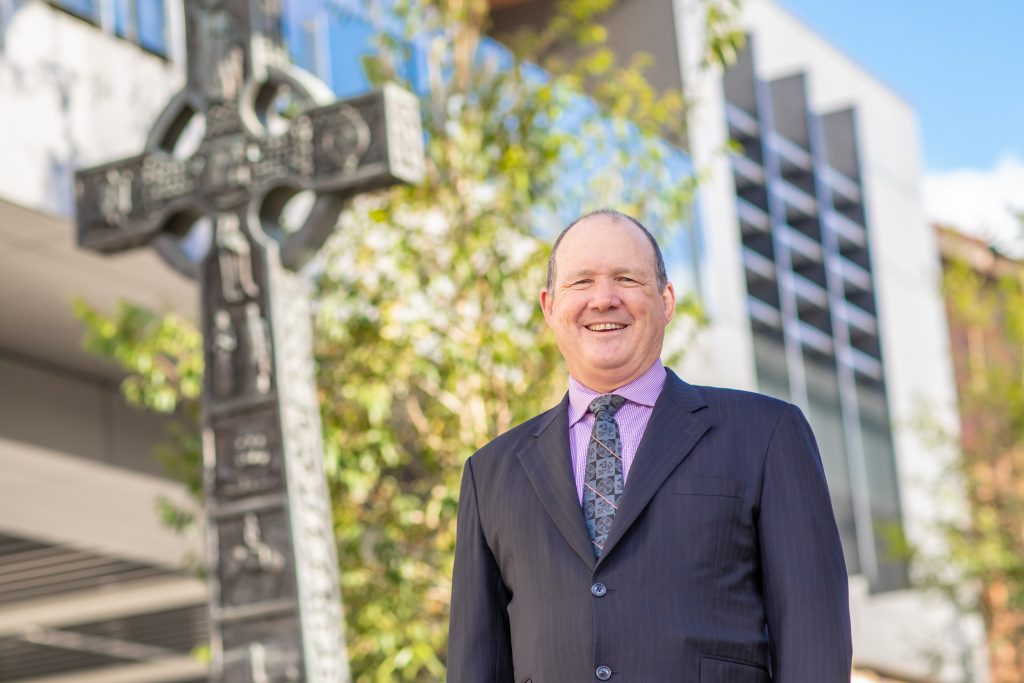
St Joseph’s College Gregory Terrace (Terrace)
What are your school’s top education priorities?
Important in the education of young people is undoubtedly student well-being. We aim to develop students who feel good about themselves and who feel supported and connected to our College community. Research shows that students perform better in and out of the classroom when their well-being is prioritised. Another key priority for us is the delivery of a quality educational program that gives students the skills to successfully navigate life after school – both academically and socially.
How do we address the advent of AI and other technology in students’ lives?
Terrace offers age-appropriate education programs to students and parents around online safety issues and the use of technology. We are constantly reviewing our programs to ensure they remain relevant for our students and their parents. We have embraced the opportunities that AI presents, and our students are being taught how to use AI in an effective and ethical way. While our teaching staff provide individual marking and online feedback to students, we are exploring ways in which AI might streamline some processes such as the preparation of teaching resources.
What role do extra-curriculars play in children’s development?
Access to an inclusive co-curricular program with a diverse range of offerings is essential for a successful educational experience. By offering diverse sporting and creative activities, schools can help students develop skills while providing them with opportunities to mix with their peers at a different level. The chance for students to have fun, be part of a team, learn how to win and lose or simply spend time with peers out of the school environment is vital for a holistic educational experience.
What has shaped your approach to education?
I have been involved in education for nearly 45 years, with 25 years as a school principal. I have been taught by excellent teachers and mentored by wonderful role models as a young teacher myself. I have also been privileged to work alongside some exceptional leaders who helped shape my own style. A key aspect of my leadership style is about relationships – with staff, students and parents. Education is people focussed and developing strong, genuine relationships is essential.
Do you have any other insight on education that you would like to share?
Education has evolved dramatically during my years as a teacher and Principal. However, quality teaching and learning, coupled with a strong sense of partnership and relationship building, remain key to shaping my years in education and leadership.
Ros Curtis AM
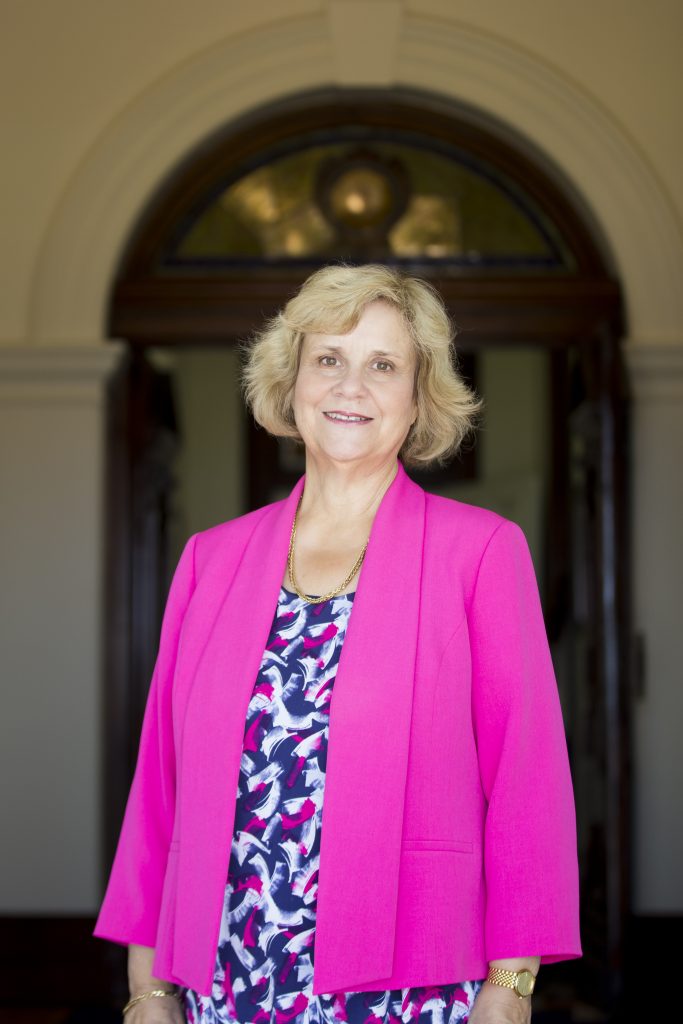
St Margaret’s Anglican Girls School
What are your school’s top education priorities?
The values and wisdom of the school’s founders, the Sisters of the Society of the Sacred Advent, guide our culture. Our top priority is preparing our students for their best possible futures through a holistic education with a focus on academic endeavour, the Anglican faith, and providing as many opportunities as possible for students to discover their passions and find their niche.
How do we address the advent of AI and other technology in student’s lives?
We are constantly innovating to ensure our teaching and learning remains at the cutting-edge. We are committed to equipping students with the technical skills needed to excel in an AI world with a focus on also educating students on its ethical and responsible use. We are actively shaping our approach to AI in teaching and learning, having developed a set of AI Guidelines. We have also just launched an AI Student Education Plan to equip students with AI skills using two carefully selected platforms: Claude.ai and Google NotebookLM.
What role do extra-curriculars play in children’s development?
Few people remember what they did in their history or maths lessons as a student, but they will always be able to tell you about their experiences in the school musical, playing sport or on an excursion. Extracurricular activities play a vital role in the development of the whole child, teaching life skills such as compromise, responding appropriately in defeat as well as when winning, sportsmanship, teamwork and communication. Students can also explore many and varied areas of interest that may inform their future pathway or career.
What has shaped your approach to education?
My approach to education has been shaped by my experience working in girls’ schools which has affirmed my view that we need to be completely focused on providing opportunities to prepare and empower our young women to have the confidence to be the great contributors and leaders of society. Girls’ schools provide that avenue.
Do you have any other philosophies or practices that guide your school?
For me, it is important to teach young people about social responsibility. This is something we aim to inspire in St Margaret’s students, both providing, and teaching the girls to look for, opportunities to contribute to their community and experience the great rewards of this. We are constantly reminding our young people of the power of gratitude and being able to appreciate the glimmers or tiny moments of joy in everyday life.
Scott Thomson
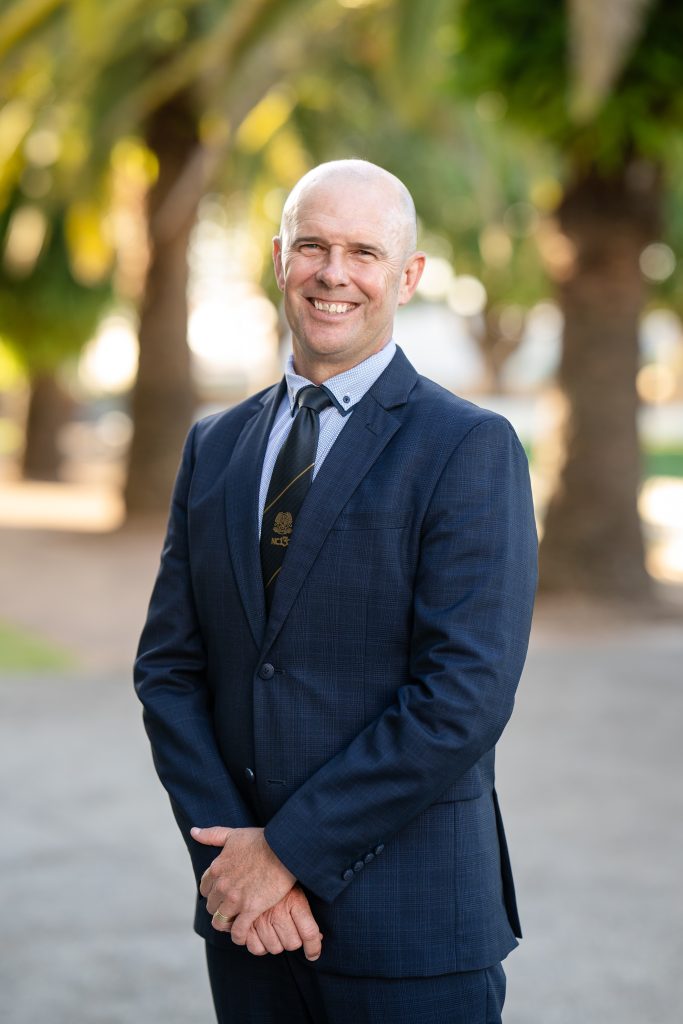
St Joseph’s Nudgee College
What are your school’s top education priorities?
I often speak about how blessed we are to be part of the Nudgee College community. I often use Brene Brown’s quote, “The difference between entitlement and privilege is gratitude”. Our main priority is to produce great young people who will make a positive impact on society. This is more important than producing great scholars, artists, musicians, actors, sportsmen or tradesmen. Central to our ideals are the tenets of the Catholic faith and the Touchstones of Edmund Rice Education Australia.
How do we address the advent of AI and other technology in students’ lives?
It is a difficult space. Whilst generative AI can be a tremendous time saver, it also invites opportunities to ‘cut corners’. We work with our students to emphasise the importance of learning and how AI can support learning, rather than simply ‘doing’. As a research aid and synthesis tool, it can be incredibly useful. Students can also use generative AI as a source of providing feedback for work they have created. Obviously, many moral and ethical issues can arise when used to ‘create’.
What role do extra-curriculars play in children’s development?
Over 96 per cent of our students participate in a co-curricular activity that involves a commitment outside of school hours. The benefits are many, but for me, the greatest benefits are those of commitment, connection and resilience, which will set our boys up for success in later life. Boys love to represent their school in the many facets of extra-curricular life at Nudgee.
What has shaped your approach to education?
I have been blessed by working with some incredible professionals across many schools in Queensland, NSW and the UK. My biggest learning from over 25 years of working in schools is the value of connection and feeling valued and cared for. In my experience, a student who feels that you genuinely are invested in their success will always succeed. Success comes in many forms, but it is attained through hard work and commitment so a student who feels valued will strive to achieve their best.
Do you have any other philosophies or practices that guide your school?
Keep the student at the centre. If this is your anchor for every element of educational decision-making and inspiration, you will always find joy and satisfaction in your vocation.
Maree Trims
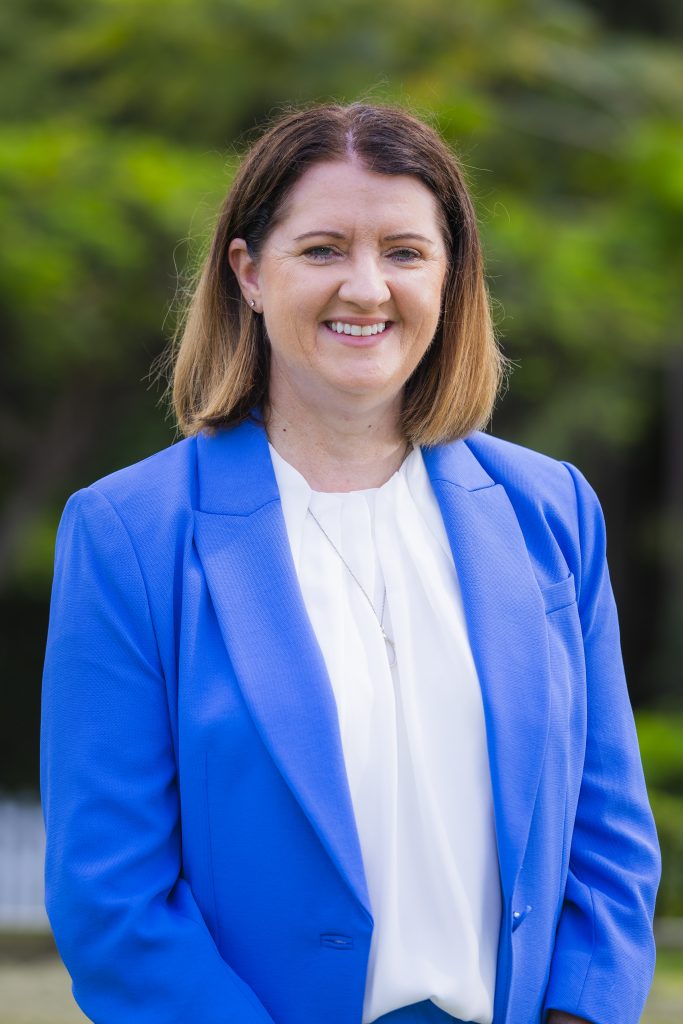
St Rita’s College
What are your school’s top education priorities?
Emerging from our profound commitment to the College motto, Virtute non Verbis – Action not Words and as instilled by Venerable Nano Nagle and the Sisters of the Presentation of the Blessed Virgin Mary, we encourage all students to engage in service learning, fostering social responsibility and compassion and empowering them to challenge inequality and injustice. We also emphasise wellbeing, with a dedicated focus on Social Emotional Learning, providing them with tools they need to navigate life with resilience and empathy. We want to see our students not only be academically successful but also socially and emotionally fulfilled.
How do we address the advent of AI and other technology in students’ lives?
It’s crucial we don’t shy away from the integration of AI and technology as it holds a valuable place in the current climate and will continue to be important well into the future. We have a responsibility to ensure students understand how to use AI and technology ethically and effectively to supplement their learning, not replace critical thinking. Our College provides clear guidance as to how students can responsibly incorporate AI and technology for assessment.
What role do extra-curriculars play in children’s development?
Cocurricular activities play a vital role in our students’ development. We offer a robust cocurricular program from Years 5 to 12, with a diverse range of opportunities in sport, music, debating, speech and communication, as well as cultural pursuits. I see these activities as an important balance to their academically-focused goals with opportunities to connect, explore and excel in areas of interest and passion.
What has shaped your approach to education?
I had many great teachers at school – their support inspired my education career and I wanted to offer the same guidance and encouragement to students. As a teacher and Principal, I have also had wonderful mentors across including our former Principal, Mrs Dale Morrow, inspiring me to approach everyone with generosity and kindness. Working with our students is a true privilege. Witnessing their growth, resilience, and achievements is incredibly rewarding, and these relationships can have a lasting impact on their lives and ours.
Do you have any other philosophies or practices that guide your school?
I believe it is essential to have a student voice, so last year I established a Student Representative Council (SRC), run by our College Captains, to provide leadership opportunities for students in Years 7 to 11, with Year 6 Primary Representatives participating too. The SRC raises awareness of issues impacting students, leads initiatives, and brings forward student ideas. On another note, a principle I emphasise is the importance of students striving for their best. Our best is unique to everyone, and that’s perfectly okay.