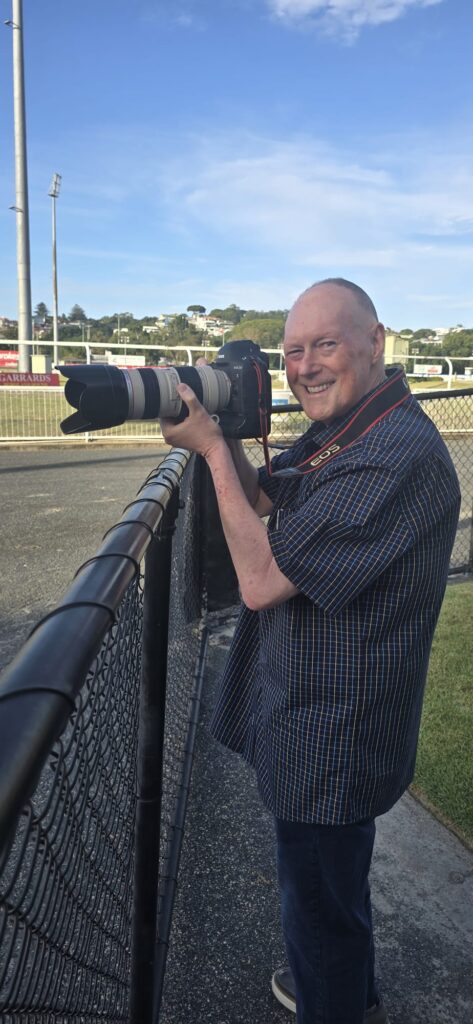
A week after photographing one of the greatest victories of his career – harness racer Leap To Fame winning the Inter Dominion pacing title – Dan Costello was told by doctors he wouldn’t live to see Christmas 2025.
Mr Costello, a fixture at Albion Park Harness Racing Club, was diagnosed with bladder cancer in late 2023, which spread to his liver and spine.
Doctors at the local hospital explained that conventional options to treat him had been exhausted and he should prepare for palliative care.
“There were other alternatives, but I was told once a doctor had signed off on a treatment as ‘no satisfactory result’ you could not go back with that drug again in any format due to the cost involved, even if it might save that person’s life,” Mr Costello said.
“To be told you need to start making preparations… it renders you speechless. You just shake your head when you think of how many people might still be alive if they were given the chance.”
In Australia’s public health system, cancer treatment is provided free to public patients under Medicare. Some newer therapies or drugs may not be available outside clinical trials or until they are subsidised by the Pharmaceutical Benefits Scheme (PBS), meaning patients sometimes face out-of-pocket costs for specific treatments.
Today, the photographer is still alive thanks to a friend and business colleague who refused to accept the limits of the public health system.
Kevin Seymour, a veteran businessman and co-owner of champion pacer Leap To Fame, stepped in to fund Mr Costello’s medical bills and, crucially, used his extensive network to secure an appointment with Dr Jeffrey Goh, a leading oncologist at Brisbane’s Mater Hospital.
“Dan was only 66 years of age – he is one of nature’s gentlemen. It was simply not acceptable for him to be told to go home and prepare for palliative care,” Mr Seymour said.
“When weighing up costs in a battle between life and death, there really is no alternative.
“If it is possible to resolve a major issue in someone’s life when you have the ability to do so, that’s simply an act of humanity and kindness.”
During their first consultation, Dr Goh told Mr Costello that although the scans were worse than anticipated, he believed the cancer was treatable.
After chemotherapy and immunotherapy, his cancer significantly reduced and he now has no active disease.
“Kevin’s given me a second shot at life,” Mr Costello said.
Mr Seymour said immunotherapy should be made freely available to everybody, “not just people who can afford it”.
“It’s a crying shame to see people lose their lives simply because they can’t afford treatment that could save them.
“If you can’t do something to help your fellow human beings, you’re not much of a character yourself.”
For now, when people stop him in the street to ask how Mr Costello survived, his answer is simple: “Faith, belief that there was a light at the end of the tunnel – and the amazing support of family and friends.”