Published August 2025
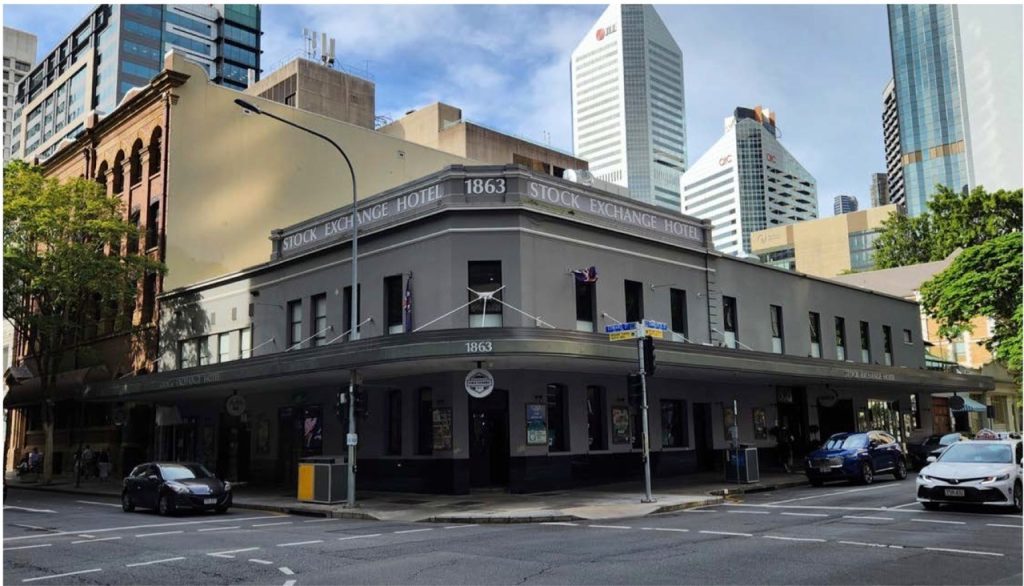
A large 38 storey tower is planned to be set into a precinct of heritage buildings owned by the Catholic Church between Edward and Charlotte Streets, leaping over the facades of the Stock Exchange Hotel and the FH Faulding building that make up one corner of the precinct.
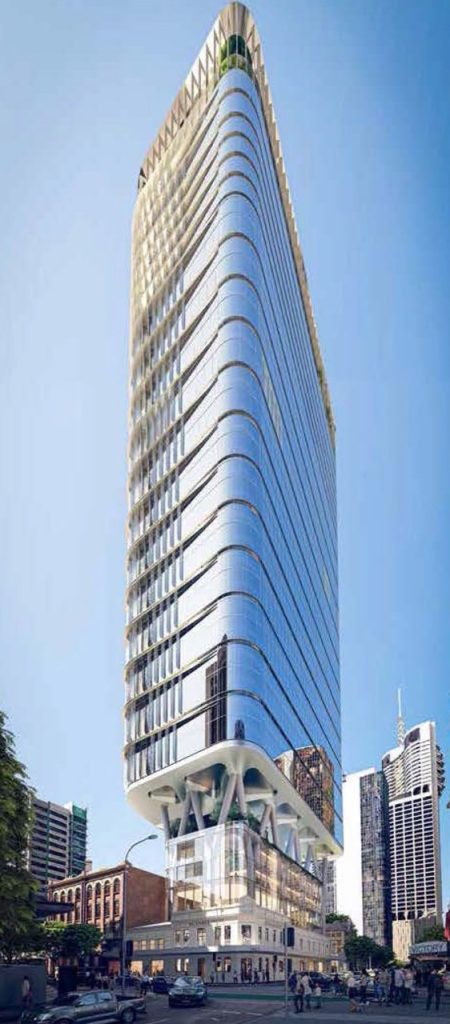
The architectural gymnastics to do this follow the Brisbane City Council’s heritage policies.
It raises an interesting point about how we approach the retention of Brisbane’s heritage.
In this case the question could be asked if the development meets the heritage requirement that it is “located, designed and scaled so that its form, bulk and proximity minimise adverse impacts on the cultural heritage significance of the Queensland heritage place.”
Is this just a streetscape stage set?
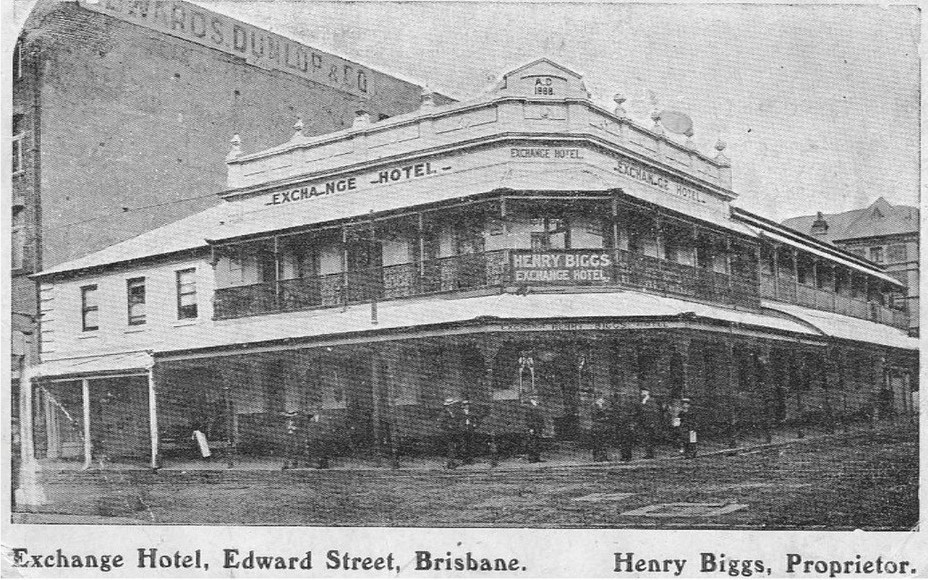
The Exchange Hotel in Edward St and Charlotte St Brisbane was built in 1863 in what was once called ‘Frogs Hollow’ – a low-lying, marshy area of Brisbane prone to flooding.
The area then was filled with residential properties, boarding houses, small businesses, warehouses and factories, and as it was close to the wharves, the hotel provided affordable accommodation upstairs for local workers, a public bar for anyone passing, and a private bar for those staying there – the model for most hotels in early Brisbane.
J M Freeland in his book The Australian Pub said: “The pub is one of the most socially significant, historically valued, architecturally interesting and colourful features of Australian Society…[it] has never been a mere transplant and adaptation of an English progenitor.”
A building and development boom in the late 1880s saw the hotel remodelled and extended along Edward and Charlotte Streets to allow it to compete with other new hotels and accommodate the increase in Brisbane’s population.
By the 1890s, Brisbane’s hotels began to function as workingmen’s clubs: The Exchange also hosted the Labor party for many years.
Stewart Brand, in his book How Buildings Learn, argues buildings generally do not adjust well, because they are built for specific purposes: they are “designed not to adapt”.
Throughout its history the Exchange Hotel has experienced changes.
Its original purpose of temporary accommodation remained viable while the wharves and rail brought guests and drinkers to the hotel.
Like many other things from the late 19th century and early 20th century, that purpose eventually evaporated as the city continued to develop, the automobile arrived, and people became more discerning.
The only purpose remaining was the serving of alcohol.
The Council Heritage citation tells us the Exchange Hotel represents an important visual reminder of the prominence of the hotel in the history of Brisbane and in particular, the CBD.
But what if left is only a shell? The verandahs that were once its defining feature were removed in the mid-20th century as were the decorative parapets.
The parapets are coming back, but not the verandahs. In the accompanying heritage report there are 28 items of significance listed.
Of those, eight are classed as highly significant (i.e. making the building worth saving), with four of them relating to windows, two to the facade, one the overall street form and one – the use as a public bar – not continued in the new scheme.
The developer, complying with the City Council Heritage policy, has saved the facade of the Exchange Hotel and in doing so their architects have designed a 38-storey tower that cantilevers over the remains of the Hotel. It is a very big building.
I hate to see these pubs disappear, or for that matter any of Brisbane’s old industrial buildings; they are important reminders and connections to an often-colourful past.
However, it must be asked if the Exchange Hotel, a building that has undergone enormous transformation from what it once was, and will from now on be recognisable only from the outside, is a meaningful retention?
To allow the Exchange and the Faulding facades to be kept, does it mean we must agree to a 38-storey building whose scale will dominate the historic precinct, leaving only whispers of memory to remain?