When my kids were young, I read them Richard Scarry’s books, particularly Busy, Busy Town. They loved the depiction of a city shown through the lens of transportation – the colourful, bustling city scenes — traffic everywhere! Of course, real life is different: in the book you can’t hear the noise, smell the exhaust, or feel the squeeze of congestion.
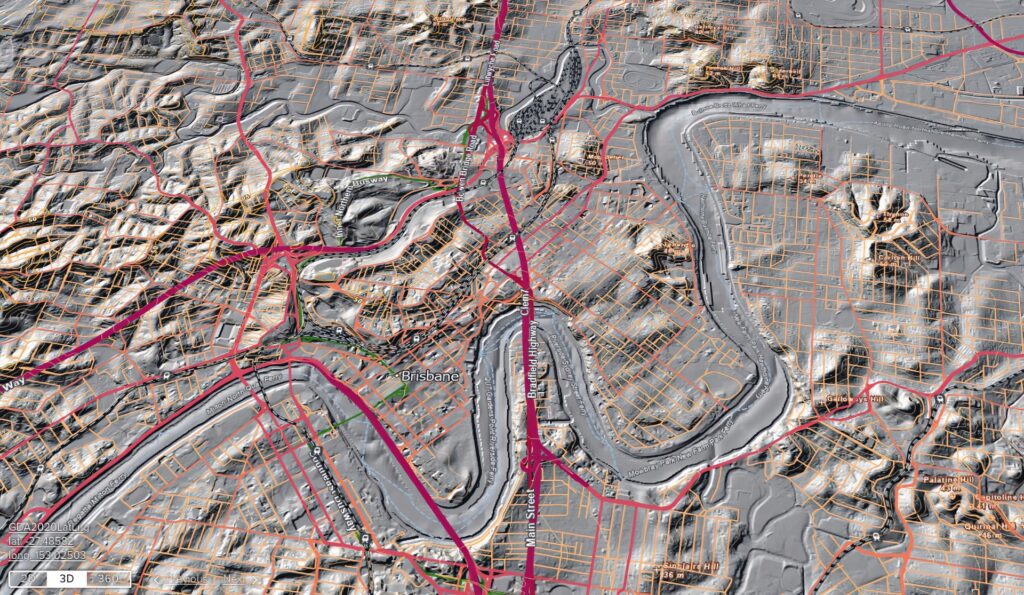
Streets are the arteries of a city. They keep it alive — connecting people, goods, and ideas — while also shaping its culture and character. In Brisbane, that character is defined by its hills and its river, which twists and loops through the city, creating peninsulas that have each developed their own distinct identity and character.
The river divides Brisbane into north and south, and when the decision was made to locate the city on one of its peninsulas, it dictated where people could live and how the city would grow.
Looking at a topographical map, the CBD is cradled by hills to the north. The wealthy moved onto the ridges of the hills as well as the river’s edge to enjoy breezes and views. The workers filled in the places behind the river or on the lowest part of the hills.
Transport was by horse and cart, so roads followed the gentlest climbs and those original winding pathways are still in place today.
Back then, no one imagined a motorised future. Cars, trucks, and highways have transformed the way Brisbane functions, while also compromising the amenity of once-quiet streets.
The river’s peninsulas once gave early residents an enviable lifestyle. Suburbs like New Farm, Teneriffe, and West End thrived as did Bulimba and Kangaroo Point. They are pockets – destinations – that traffic must feed into rather than travel through and thus have avoided the relentless rise in through traffic.
Transportation including cars and trucks has profoundly reshaped Brisbane’s character and has significantly affected the city’s amenity.
The old suburban arterials — Sandgate Road, Milton Road, Enoggera Road, Lutwyche Road — were never designed to carry today’s traffic volumes, let alone the endless procession of large vehicles. Despite efforts to relieve pressure with tunnels, B-doubles still roar past timber-framed houses, their windows and doors shut tight against the noise. Sirens of ambulances and police echo day and night.
Think of roads like waterways: once, Milton Road was a small, fordable stream with accessible “banks” on both sides that once supported local businesses. Today, it’s a raging river, lined with clearway signs that discourage local businesses and make neighbourhood life harder.
Other cities tackle this differently, restricting heavy vehicles during peak hours or diverting them onto dedicated freight corridors. Brisbane should consider doing the same. Reducing heavy truck traffic on suburban streets especially during the day would significantly improve quality of life for thousands of residents.
In the areas of Teneriffe, New Farm, Ascot and Newstead, growth is inevitable. From Newstead through Hamilton North, high-density residential developments are rapidly rising, and Breakfast Creek Road will become one of the city’s busiest and most congested corridors.
This raises necessary questions:
- How do we prevent the continued erosion of neighbourhood amenity?
- Can we manage traffic patterns before congestion reaches breaking point?
- What happens when drivers avoid congestion and divert into local streets seeking shortcuts?
These are challenges we must confront now, rather than simply passing them down to someone else in the future.
The streets of our town reflect the choices we’ve made — and those we’re still making. They connect us, define us, and, increasingly, test us. Perhaps it’s time to rethink how we balance growth, movement, and liveability before we lose the qualities that make Brisbane unique.
Is traffic a problem on your street?
Have Your Say – email [email protected]