A diver leaps off a diving board, a strikingly curved, modernist building looking over his descent past a spiralling tower to the waters of Brisbane’s first Olympic pool.
An octogenarian walks the same path through the rolling green expanse of Victoria Park that she has traced twice daily for the last 45 years, stopping to talk to the gardeners who know her by name.
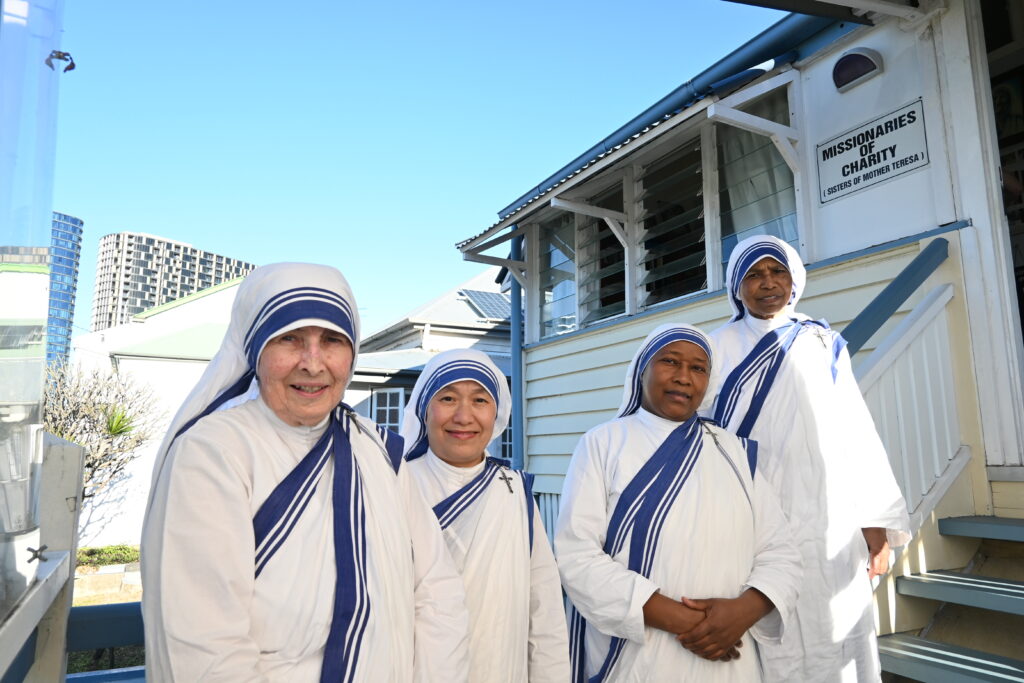
On Saturday mornings below a creaking inner-city Queenslander, four Sisters clad in white and cobalt tunics serve meals to their neighbours, some of whom come from the street, some from government housing, and some from shelter of the suburb’s dwindling number of boarding houses.
These are the faces of Spring Hill, a suburb which has seen rapid change that will only accelerate as Brisbane squares up to a housing crisis and its duties as an Olympic city.
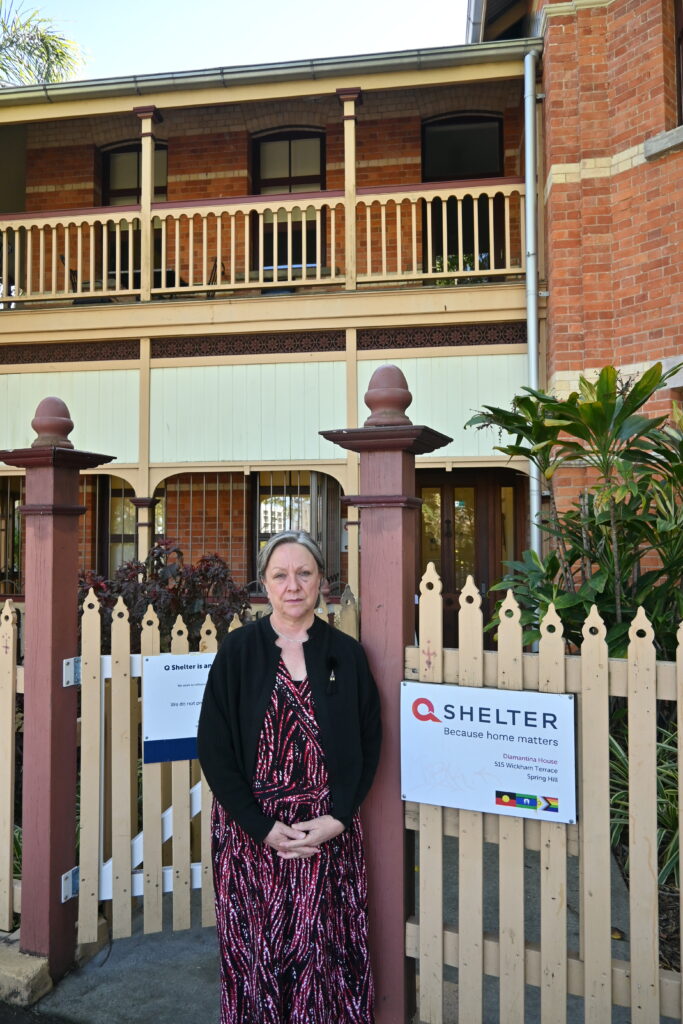
CEO of Queensland (Q) Shelter, our state’s peak housing body, Fiona Caniglia, said: “We really need about 8 – 10 per cent of all housing to be social and affordable homes to meet the community’s needs, and at the moment it’s only about 3.5, definitely under 4 per cent.”
“This is a critical shortage and that’s why we have people on [housing] wait lists.”
Spring Hill, a previously affordable inner-city suburb – from colonisation onwards characterised by simple worker’s cottages – has long provided a home for Brisbane’s lower socio-economic inhabitants.
Stemming the tide of housing insecurity
Gentrification and property development has inevitably increased property prices, leading to the displacement of the suburb’s traditional population.
Mission Australia, whose Queensland headquarters are in Spring Hill, said the suburb’s transformation has been characterised by increasing private rental costs, the closures of boarding houses, utilising motel accommodation as low-income housing, and increased migration from New South Wales and Queensland.
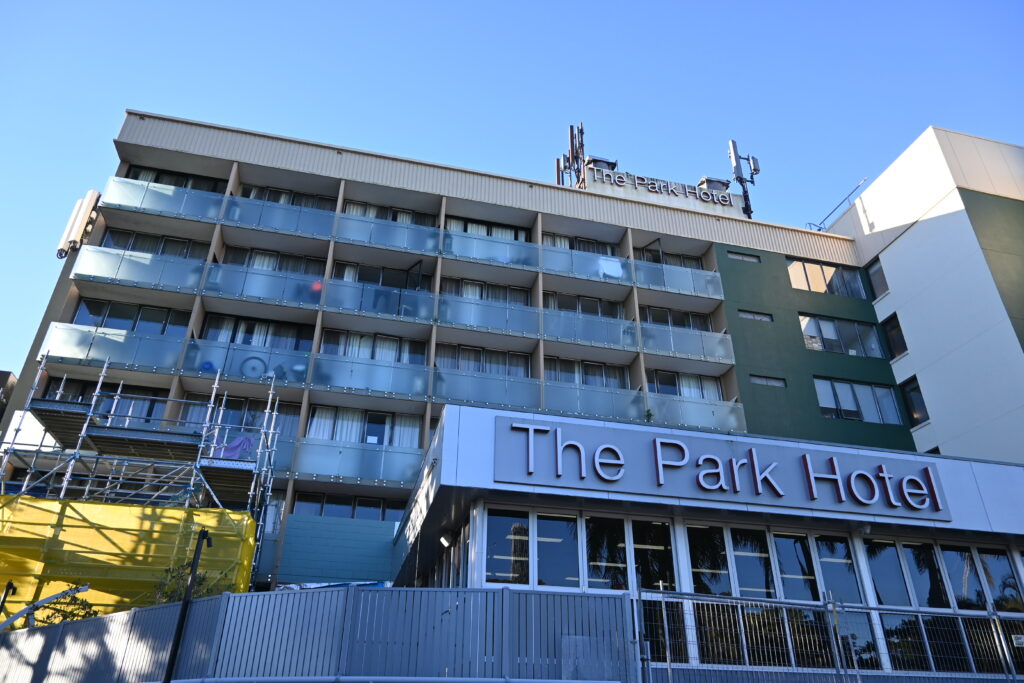
They estimated the suburb to have at least 160 units of social and affordable housing between themselves, The Salvation Army, and the government’s repurposed Park Motel.
A Mission Australia spokesperson said: “We have the ability to supply 60 beds per night but we are often full, and Roma House referrals come direct from the Department of Housing and Boundary Street consistently at capacity.”
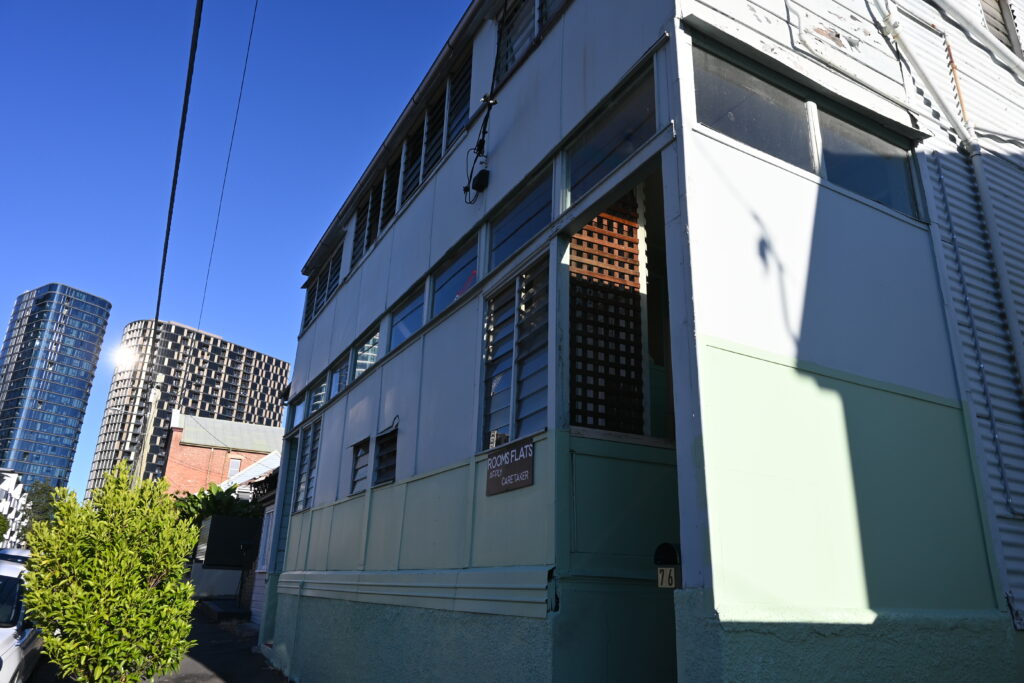
Spring Hill’s streets have been populated by boarding houses for many years, but Ms Caniglia said rising prices have caused boarding houses to close.
“If you’ve got an old boarding house and it’s in a very desirable location, the owner of that might decide that there’s a better use, which is to get residential development out of it, but this often means that people on very low incomes with a lot of vulnerability are being evicted and displaced.”
She said in the 1990s, there was an urban renewal program in Brisbane’s inner northeast.
“By 1994, 40 per cent of known boarding houses had been redeveloped or were earmarked for redevelopment and many more were lost as well.”
In January 2024, there were 375 homeless individuals on the Brisbane BNL in temporary accommodation, up six per cent from January 2023, a report by QShelter and Australian Housing and Urban Research Institute found.
775 people in the postcode encompassing Brisbane City, Spring Hill and Fortitude Valley were on JobSeeker or Low Income Card payments in June this year, well above the Australian median of 95.
Mission Australia’s Queensland Director Stephen Vines said: “The longer Mission Australia’s staff were able to provide support to people experiencing homelessness, the more likely those people were to exit homelessness.
“However, efforts to find long-term housing for people once they become homeless are severely constrained by the lack of affordable housing available right across the country.
“Mission Australia and other homelessness services are only able to find a secure long-term home for a third (31 per cent) of people experiencing homelessness.
“Without a significant boost of social and affordable housing across the country, homelessness cannot be eradicated.
“Mission Australia is calling on governments for greater investment to build the one million new social and affordable homes that will be needed over the next 20 years to ensure that everyone who seeks help is connected to a safe place to call home.”
Community support and housing services have sprung up around this population in Spring Hill and neighbouring Fortitude Valley, including Wesley Mission’s Brisbane Relief Hub, the Salvation Army, Suited to Success, a Vinnies relief hub, and many not-for-profits headquartered in the area, including Mission Australia, Jacaranda Housing, Bric Housing, BHC, Valley Hearts, HART4000, The Smith Family, YMCA, Footprints Community, and The Lady Musgrave Trust.
The Missionaries of Charity (Sisters of Mother Theresa) in Spring Hill have been helping the poor for over 25 years.
The four sisters live simply, kept by donations and “divine providence”, in an old Queenslander in Spring Hill, serving meals from the Brisbane City Council-approved commercial kitchen downstairs.
Their soup kitchen, run every Saturday from 10am, often feeds about 40 people, sometimes up to 65 each week.
Known to some as the “sisters’ church”, they said people come for companionship and to make friends.
“We chose to live in this place because it puts us in contact with the poor,” Sister Hannah said.
Sister Hannah said they have seen lots of change in the area, with house prices rising and more construction everywhere.
Speculative values compound rising prices
The median rental price for Spring Hill has increased by 50 per cent from $400 in 2021 at the last census to $800 in 2025, according to the REA Group.
Further increases can be expected – QShelter’s 2024 South East Queensland Displacement Monitoring Report noted that Sydney 2000 contributed to a permanent increase in house prices of 14.4 percent.
Ms Caniglia said speculative property values are already having an impact.
“We’re already seeing posters and signs from real estate agents talking in speculative ways about property values in the surrounding suburbs, not just Spring Hill, and how they’re going to be increased because of the desirability of all of the renewal projects that will happen as part of the Olympics,” she said.
Ms Caniglia recognised the importance of developing residential homes for different household needs, and said our current lack of housing stock has driven prices up.
QShelter supports Brisbane City Council’s plan to review the low-medium residential zoning which applies to the residential blocks fronting Gregory Terrace and other patches of Spring Hill.
“Places like Spring Hill offer a unique set of opportunities where building heights can be higher, which is a positive thing because it means that you’re getting the best yield from the site and you house more people,” she said.
“…It’s better to have mixed communities that are vibrant and where there’s an exchange of opportunities, and give people the opportunity to live closer to work or even be anywhere near work.
“But to meet the needs of more vulnerable households, and especially people in the lowest 40 per cent of the income spectrum, you really do need to have a mix of housing types.”
She broke down the buzzwords we have been hearing about, social and affordable housing.
“Social housing, which government tends to build or fund, is intended for households with greater vulnerability, and they only pay approximately 25 per cent of their income on rent.”
“Affordable housing tends to be a discount-to-market rent product… [they] really suit people on lower wages because they’re just starting out in their career, like teachers, healthcare workers, and emergency services workers.”
However, Ms Caniglia said the government needs to be intentional about this, because the private market does not necessarily deliver products that are accessible to those that need social and affordable housing.
In June, the Queensland Government pledged to invest $5.6 billion into new social and community housing, with a goal of building 53,500 social and community homes by 2044.
Despite recent pledges, the government has underinvested for “far too long”, Ms Caniglia said.
Olympic challenges and opportunities
If the Queensland government goes through with its latest plans, the suburb will see an influx of visitors to the brand-new 63,000-seat Olympic and Paralympic Stadium in Victoria Park / Barrambin, and 25,000-seat national aquatic centre built at the site of the current heritage-listed Centenary Pool.
Ms Caniglia said: “We do think that one of the risks as we head towards the Olympics is that more people put their homes into the short-term rental market.”
“Every home you take out of the private rental market is a home that people can’t access for the longer term.”
QShelter’s displacement report found in June 2024, Brisbane had 2,666 available properties listed on Airbnb that could be suitable for long-term rental accommodation.
This is before the city is transformed to welcome millions of visitors for the Olympics and ongoing higher visitor numbers to the new stadiums.
Ms Caniglia highlighted other housing issues the Olympic construction may cause: diverting construction workers from critical housing projects to Olympic projects, and the need to house a new construction workforce near their work.
Just down the road at the RNA Showgrounds, a 20,000-seat arena and athlete’s village expected to house over 10,000 for the Olympics will be built.
Here, though, Ms Caniglia sees an opportunity.
“We have a position that a proportion of all the housing in the athletes’ villages should be for social and affordable housing.
“And that we should also be setting a target for how many of those homes are universally accessible so that it can accommodate people living with disability,” she said.
Olympic impact on development
The Queensland Government passed legislation in June to ensure all venues built for the 2032 Olympic and Paralympic Games will be exempt from 15 major planning rules.
This includes the Environmental Protection Act, the Planning Act, the Queensland Heritage Act, the Local Government Act, and the Nature Conservation Act.
The legislation means Olympic development could throw out the window much of the planning and strategy that has been set in place for the development of this city.
QShelter’s displacement report found that hosting the Games tends to expedite major urban renewal and infrastructure projects.
“Fast-tracked development timelines for such projects can sideline appropriate community consultation and planning processes,” the report read.
Member for McConnel Grace Grace said she wants to see more consultation and will be holding a community meeting at 6pm on September 10 at Ballymore Theatre.
“I would like to see a fairly significant community reference group set up that the government can liaise with and consult with regards to all the issues that will be coming forward,” Ms Grace said.
“It’s going to be very impactful, because we have got a big hospital, plus we have got schools; all the community, whether it’s business, education, or residents, they all want to know how exactly they can get their concerns… out there.”
Ms Grace said providing for housing during the Olympics will be important.
“We need to ensure that these people have got somewhere to live, and the housing structure has to be put in as soon as possible.”
“We have got seven years to build more stock… and put some funding together…, and I would like to see more stock,” she said.