We delegate the authority to plan our cities to experts; however, in deciding our city’s shape and growth, it is our responsibility to ensure it represents the voices of those who live in it.
The prime reason for a City Plan is to set out a vision for the city and the elements that make it up.
It is a critical document that has an important role in informing and providing certainty to communities. The Council strategic planning team creates it, and then it is enforced by Council’s statutory planning team. For those of us who have been in architecture or in the private planning sphere, it is a familiar document, but to the general public it can be overwhelmingly complex.
Authority planners feel they are the guardians of the city, under siege from architects, developers and politicians. They take refuge in the document they have created that has been adopted into law. Why are they now ignoring it?
Any City Plan is trying to put controls around something that is naturally organic. A city is comprised of elements that, like life itself, are continuously growing, declining and dying so any document produced must be flexible to allow for change within its principles.
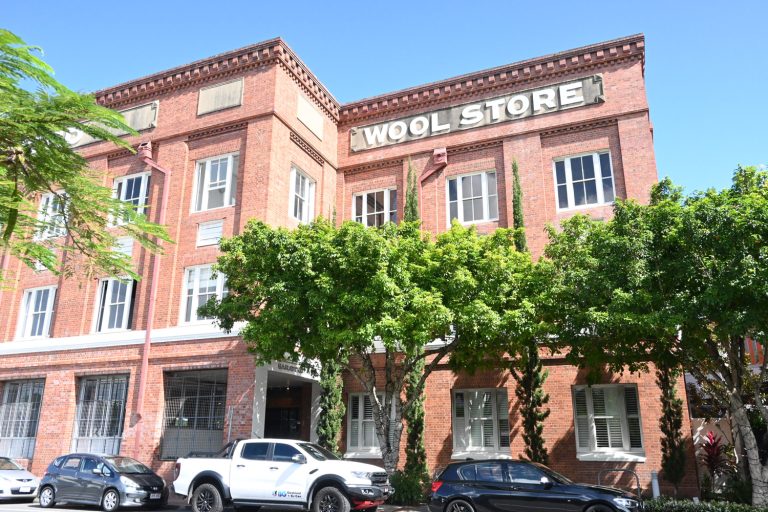
To give you an example, in Brisbane the river was the carriageway for goods entering and leaving. Industrial uses grouped close to the city along with woolstores, and worker housing creating its unique character.
The expansion of the city transformed these places into highly valued precincts, attracting wealthier residents. While that earlier character established in Teneriffe and New Farm has somewhat limited the size and density of development that can occur there, as Teneriffe spills into neighbouring Newstead the notion of character disappears, and it is becoming a place in the hands of private interest.
Paradoxically the City Plan that still establishes a vision for this area is being ignored by those charged with the duty to defend it. And it is not as if the City Plan is not specific about what it requires and what had been agreed with the community.
In Newstead the Mirvac developments have set a precedent for high rises north of Gasworks, which is now quickly transitioning from motor vehicle dealerships and small scale industry into high rise residential.
With no discussion, it appears that Council has moved the Newstead high rise precinct into Teneriffe and now regards its conclusion to be the former Riverside Industrial Sands site, approved with a scheme that is worse than what was initially presented. The outcome in Teneriffe will be significant with an increase in vehicular traffic and the creation of an enormously scaled, mostly privatised enclave.
As for Newstead, the vision that Trevor Reddacliiff and his team had for the precinct as an urban village has been abandoned as Council has left it to developers who turn to the only typology they know: the high-rise apartment. All completely contrary to the plan.
Like nature, communities thrive and grow with diversity. High rises do not provide diversity as they are single element buildings that are successful only when they can provide their inhabitants with privacy and security. They exclude rather than include people – they are large, self-governing and isolating islands.
We have a City Plan that clearly sets out the expectations of the community. Those expectations cannot be synonymous with the interests of developers as it is the community that will bear the burden of the consequences of allowing them to do so.